
MLK Day Activities for Middle and High School: Rhetoric, Research and Writing
 Andy Navarro · Seasonal & Holiday · · 2 min read
Martin Luther King Jr. Day lesson ideas for grades 6–12: analyze his speeches for rhetorical appeals, read primary sources, connect to the civil rights movement and write about service.
Martin Luther King Jr. Day falls on the third Monday in January, which is January 18 in 2027. Most schools are closed that day, so the lesson usually happens the Friday before or the Tuesday after. For secondary students, the best MLK Day lessons go past the one famous line everyone knows and look at how Dr. King built an argument.
Analyze a speech for rhetorical appeals
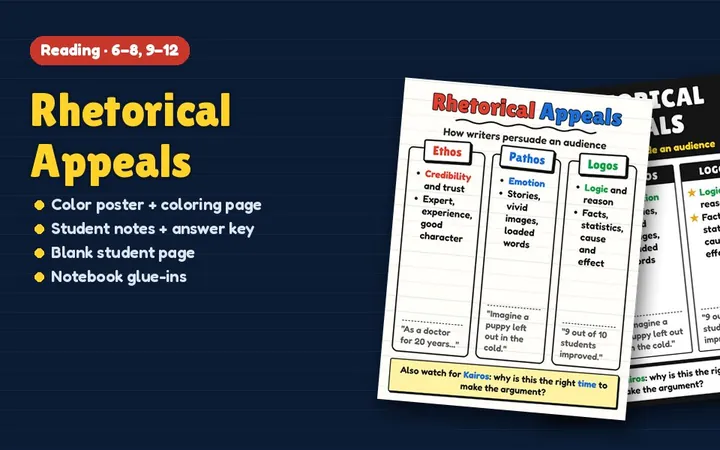
Dr. King was a trained preacher and a careful writer. His speeches and letters are full of ethos, pathos and logos. Give students a short excerpt and have them mark each appeal in a different color, then explain why it works for that audience. The 1963 March on Washington speech is the obvious choice, but "Letter from Birmingham Jail" is even richer for older students because he answers specific criticisms one by one.
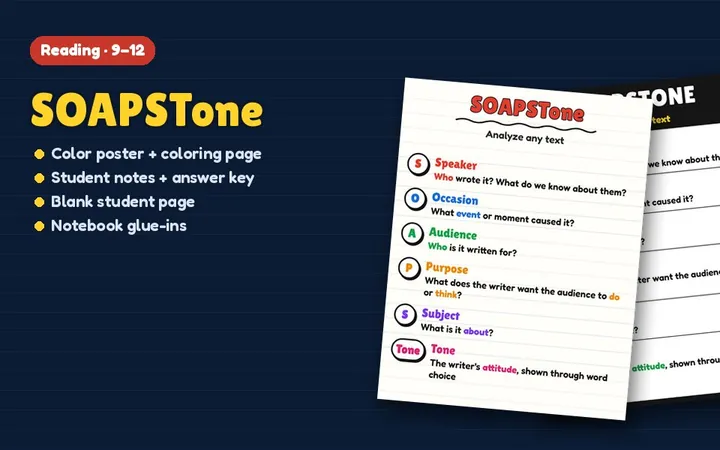
A SOAPSTone organizer (speaker, occasion, audience, purpose, subject, tone) helps students see that the same message changes depending on who is listening.
For a full close read, Let It Ring breaks the March on Washington speech into eight chunks with annotation space beside each one, plus an ethos/pathos/logos sort, a figurative language scavenger hunt, an allusion tracker and a model analysis paragraph.
Study the structure of an argument
"Letter from Birmingham Jail" is a model argument: a clear claim, evidence, counterclaims and rebuttals. Have students find one counterclaim Dr. King addresses and explain how he answers it. Then have them use the same structure on a school issue they care about.
Read primary sources
Pair the speech with primary sources from the civil rights movement: photographs, newspaper headlines from 1963, or a timeline of events from the Montgomery bus boycott through the Voting Rights Act. Students can sort sources into primary and secondary, then use them as evidence in a short response.
Connect to service
MLK Day is a national day of service. Students can research a local organization, write a proposal for a class service project or reflect on a time someone helped them. Keep the writing personal and short so every student has something to say.
Discussion that stays respectful
Set norms before discussing race, justice and current events. Ask students to use evidence from the texts, speak from their own experience and avoid speaking for others. A quick journal prompt before discussion gives quieter students time to think.
The resources below include anchor charts for rhetorical appeals, SOAPSTone, the parts of an argument and primary vs. secondary sources, plus a collection of journal prompts.
Questions teachers ask
When is MLK Day 2027?
Martin Luther King Jr. Day is the third Monday in January. In 2027 it is Monday, January 18.
Which Martin Luther King Jr. text is best for high school?
"Letter from Birmingham Jail" works especially well for high school because it is a full argument with counterclaims and rebuttals. The 1963 March on Washington speech is a strong choice for rhetorical appeals.
How do I teach rhetorical appeals with MLK's speeches?
Give students a short excerpt, have them highlight ethos, pathos and logos in different colors, then explain why each choice fits the audience and occasion.



Comments
Questions, tweaks that worked in your room, ideas for other teachers: share them here.
Loading comments...