Trailblazers: Black History Month Biography Passages + Research Project (Grades 4–8)
$5

Lessons · Grades 8–12 · PDF + Google Slides · $4
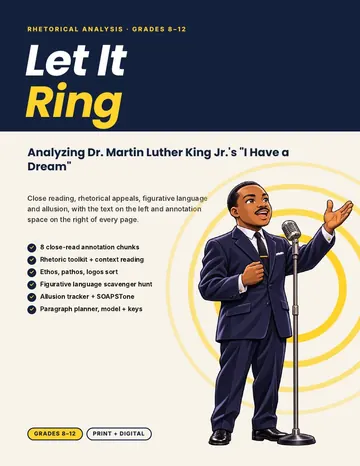
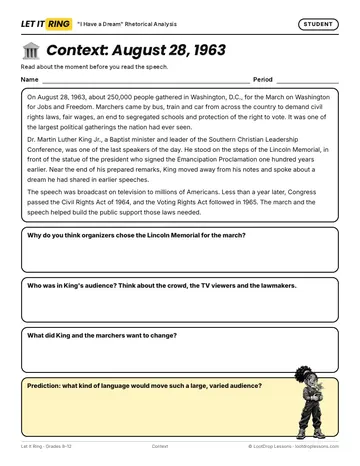
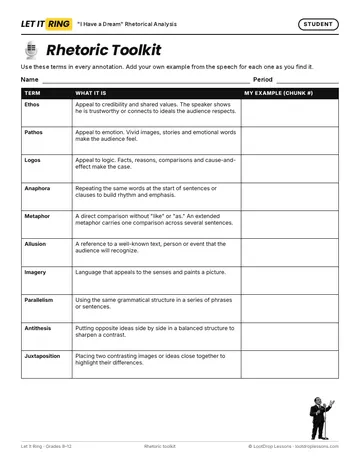
Let It Ring is a complete rhetorical analysis lesson for Dr. Martin Luther King Jr.'s "I Have a Dream" speech, delivered at the March on Washington on August 28, 1963. Students start with an original context reading and a rhetoric toolkit (ethos, pathos, logos, anaphora, metaphor, allusion, antithesis and more).
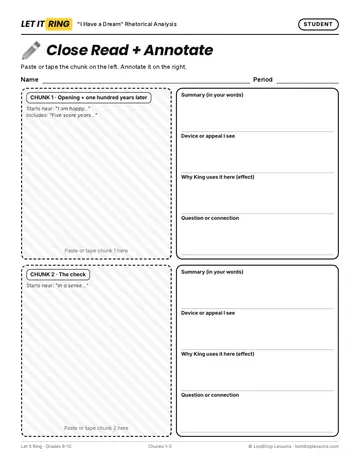
The speech is split into eight chunks in order. Each annotation page has the chunk on the left and four annotation prompts on the right: summary, the device or appeal, why King uses it, and a question or connection. Students then sort nine moments by appeal, hunt for ten examples of figurative language, track King's allusions to the Gettysburg Address, the Declaration, the Constitution, the Bible and more, and complete a SOAPSTone analysis.
A paragraph planner, an original model paragraph, a Dream Today reflection and answer keys finish the lesson. Because the speech is still under copyright, its text is not printed here: paste or tape in a licensed copy (your textbook, or the free excerpt from the Gilder Lehrman Institute). The digital version has a paste-in box on each chunk slide so you only add the text once.
Topics: journal, writing, prompts, bell, ringer, intervention, rti, mtss, sped, slides, powerpoint, presentation, middle, school, high, grade, 8, 9, 10, 11, 12
Built for grades 8–12 (middle school and high school ELA). Format: PDF + Google Slides. $4 on its own, or included with All-Access. Ways to use it: MLK Day and Black History Month; rhetorical analysis units.
Grades 8–12, so it fits middle school and high school ELA classes.
PDF + Google Slides.
$4, or free with an All-Access membership.
Teacher guide with a 2–3 day plan + where to get the text, Context reading: August 28, 1963, Rhetoric toolkit (10 terms), 8 close-read chunk pages: text left, annotations right, Ethos, pathos or logos sort, SOAPSTone organizer, Figurative language scavenger hunt (10 finds), Allusion tracker.
Yes, an answer key is included.
Yes. The digital version works in Google Slides or PowerPoint, so students can type their answers and you can assign it in Google Classroom.
Popular ways to use it: MLK Day and Black History Month; Rhetorical analysis units; Argument and persuasive writing; AP Language prep.