December ELA Lesson Ideas for Middle and High School: Seasonal Stories, Holiday Writing and Engagement
 Andy Navarro · Short Stories ·
December ELA lesson ideas for middle and high school: winter short stories, holiday writing prompts and ways to keep engagement up until break.
December in a secondary classroom is a balancing act. Students are distracted, the calendar is packed, and you still want the month to count. The best December ELA lesson ideas for middle and high school use the season as a hook while keeping the skills real: close reading, theme, voice and structure. A winter story is still a story to analyze, and a holiday prompt is still writing practice.
Here are the short stories, writing activities and engagement moves I come back to every December.
Seasonal short stories worth teaching in December
December is short story season. A story you can finish in one or two class periods fits a month full of shortened days and surprise schedule changes. These all work well, and most are in the public domain.
- Jack London, "To Build a Fire" (1908). A man and a dog cross the Yukon at seventy-five degrees below zero, and the man ignores every warning. It is ideal for man versus nature conflict, foreshadowing and the contrast between the man's confidence and the dog's instinct. Ask students: what does the dog know that the man doesn't?
- O. Henry, "The Last Leaf" (1907). A young artist with pneumonia decides she will die when the last leaf falls from the vine outside her window. The twist at the end makes it a strong companion to any lesson on situational irony and on sacrifice as a theme.
- Hans Christian Andersen, "The Little Match Girl" (1845). Very short and very sad, which makes it a powerful text for mood, imagery and symbolism. Have students track each vision the girl sees and what it represents.
- Robert Frost, "Stopping by Woods on a Snowy Evening" (1923). Not a story, but a perfect one-day poem. Students can debate what the speaker's "promises" are and why the last line repeats.
- Langston Hughes, "Thank You, Ma'am" (1958). Not a holiday story, but it is about unexpected kindness and generosity, which fits the season well. It is still under copyright, so use a licensed copy from your textbook or anthology.
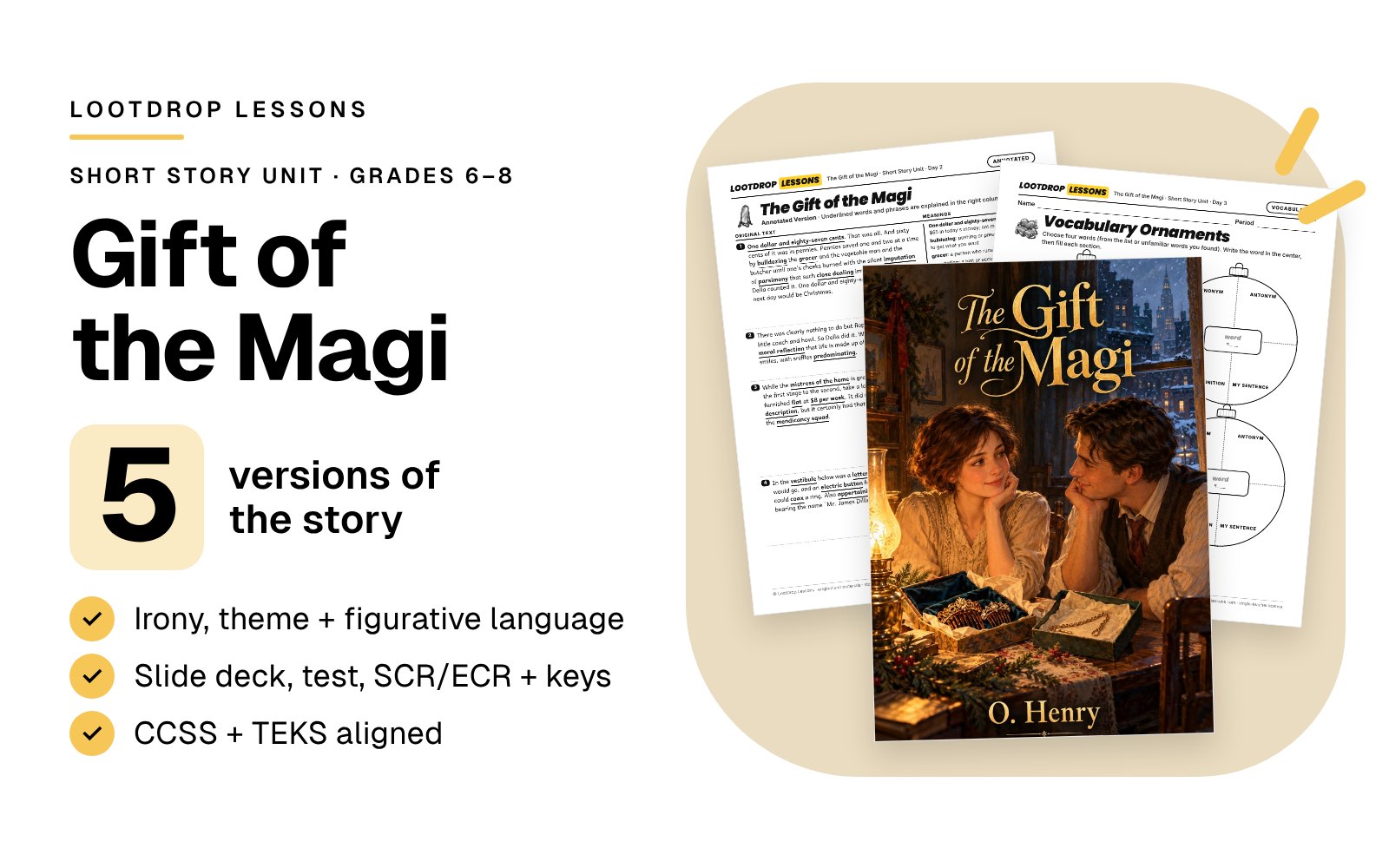
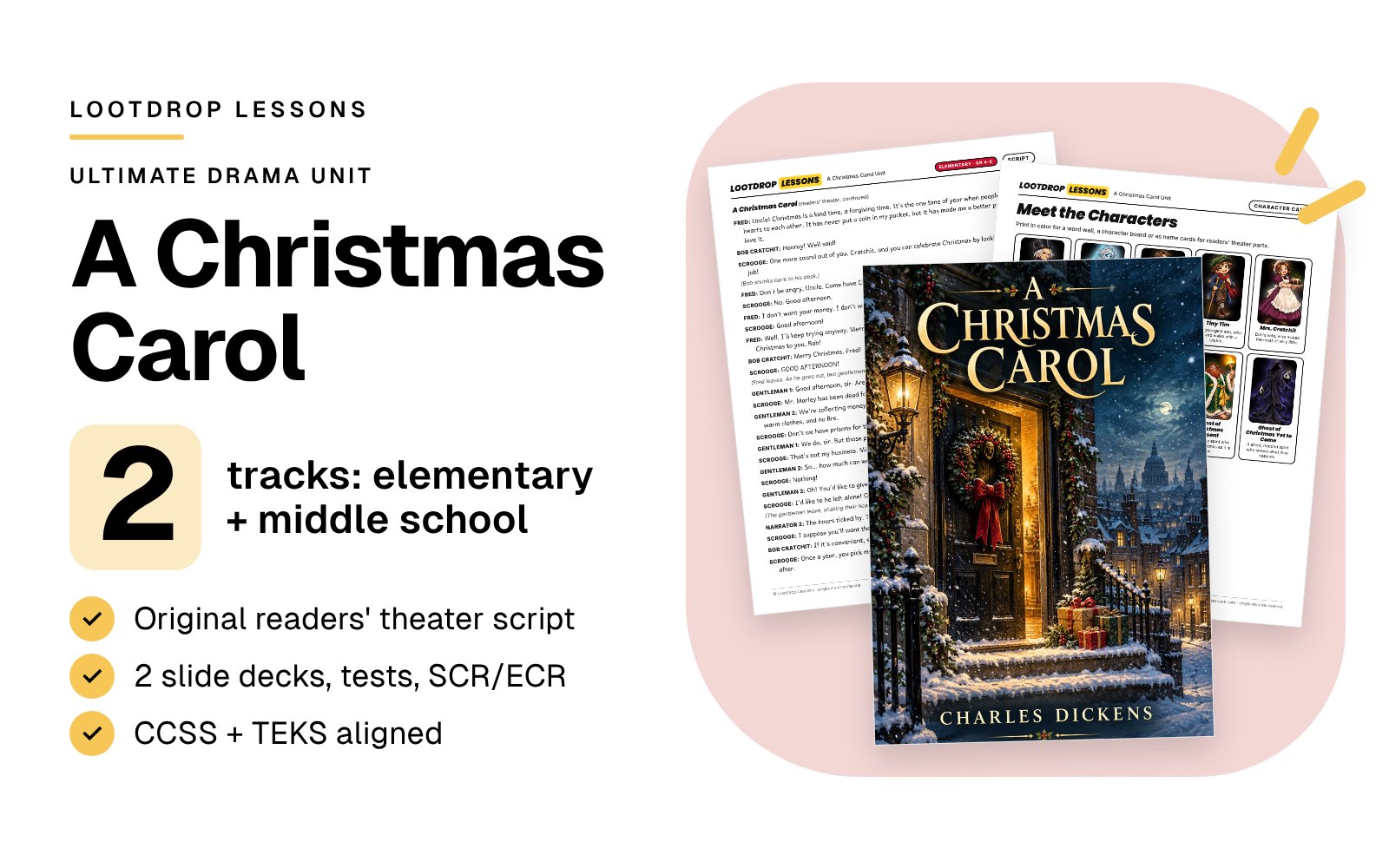
Two December classics have their own units on my site: "The Gift of the Magi" and A Christmas Carol. If you teach either one, the stories above make strong pairings. "The Last Leaf" and "The Gift of the Magi" are both O. Henry twist endings, so students can compare how he plants clues. "The Little Match Girl" and A Christmas Carol both show poverty during the holidays, and students can compare how each writer wants the reader to respond.
A simple routine for any winter story
You don't need a full unit for every December text. This three-day routine works with almost any short story:
- Day one: read and predict. Read aloud with students following along. Stop once, right before the turn in the story, and have them write a quick prediction with one reason from the text.
- Day two: go back in. Students reread one key section and annotate for one focus: conflict, imagery, irony or character change. Then discuss in small groups with one guiding question.
- Day three: write. A short constructed response on theme, or a creative piece that imitates the author's style. Keep it to one paragraph so it can be finished in class.
Shortened days? Combine days two and three. Lost a day to an assembly? Skip the annotation and go straight to discussion.
Holiday-themed writing that still teaches
Holiday writing gets a bad reputation because it often turns into fluff. It doesn't have to. Give each prompt a clear skill target.
- Sensory description: Describe a winter holiday meal, a family gathering or a cold morning at the bus stop using all five senses. Target: one simile and one strong verb in every sentence.
- Narrative with a twist: After reading an O. Henry story, students write their own short story with a surprise ending. They must plant at least two clues a careful reader could catch.
- Argument: Is it better to give or to receive? Should schools have a longer winter break? Are holiday movies better than regular movies? Require a claim, two reasons and a counterclaim.
- Tradition essay: Students explain a tradition from their family, culture or community, any holiday or none at all. It is informational writing with a personal angle, and you learn a lot about your students.
- Letter to a character: Write a letter to Scrooge, Della, or the man in "To Build a Fire" giving advice. Students have to understand the character's choices to do it well.
- Gift for a character: Choose a gift for a character from a text this semester and explain why it fits them, with evidence. It is characterization review disguised as a holiday activity.
Keep the month inclusive by making winter, family and tradition the theme rather than any one holiday. Students who don't celebrate Christmas still have plenty to write about.
Keeping engagement up until break
By mid-December, even your best students are running low. A few moves help keep the room working:
- Shorter tasks, more of them. Three fifteen-minute tasks beat one forty-five-minute task this time of year.
- Get them moving. Gallery walks, four corners and stations give restless students somewhere to put their energy.
- Make writing social. Round-robin stories, where each student adds a piece and passes it on, and team writing battles get even reluctant writers producing.
- Use a daily warm-up. A consistent journal prompt to start class gives every period the same calm beginning, no matter how wild the hallway was.
- Save something fun for last. Tell students on Monday what the Friday activity is, and keep it tied to the week's reading.
A sample December week
- Monday: journal warm-up, read "To Build a Fire" with a prediction stop.
- Tuesday: annotate for conflict and foreshadowing, small group discussion.
- Wednesday: SCR on theme, then a gallery walk of the best claims.
- Thursday: "Stopping by Woods on a Snowy Evening" in one period, then a sensory description quick write.
- Friday: collaborative story building, then share the funniest results.
December ELA resources
If you are teaching the classics, my Gift of the Magi unit has the full story in five differentiated versions with a slide deck, and the Christmas Carol drama unit has elementary and middle school tracks with an original readers' theater script. For writing, Creative Writing Story Starters teaches four ways to open a story, Pass It On! turns a round-robin drawing game into a story, and my journal prompt collection covers the daily warm-up. Write Royale is free and runs team writing battles from any device. Everything is below.