
New Semester Reset for Secondary Teachers: A January Plan for Procedures, Seating and Goals
 Andy Navarro · Classroom & Free Tools ·
A new semester reset for secondary teachers: reboot procedures, change seating, set goals and start fresh routines when school returns in January.
January is the closest thing teachers get to a second first day. Students come back from winter break rested (or not), schedules shift, new students show up, and the routines that were slipping in December are now gone. A new semester reset for secondary teachers isn't about starting over. It's about taking what worked in the fall, fixing what didn't, and being clear with students about how the second half of the year will run.
Here is how I plan the first week back: procedures, seating, goal setting and fresh routines.
Before break: decide what to reset
The reset starts before you leave in December. Take ten minutes and make two quick lists:
- What is working. The routines students follow without being reminded. Keep these exactly as they are.
- What slipped. The procedures that faded by November: phones, turning in work, entering quietly, hall passes, talking during independent work.
Pick two or three items from the second list. Not ten. If you try to fix everything in January, nothing sticks. Choose the ones that cost you the most class time.
Reboot procedures like it's August
The biggest mistake I see in January is assuming students remember. They don't, and honestly, after two weeks away, neither do we. Teach your key procedures again, the same way you did on the first day.
- Explain the why. "We are going to start every class with a warm-up so we don't lose the first ten minutes." Teenagers follow procedures they understand.
- Model it. Show exactly what it looks like, including what it doesn't look like. A little exaggeration helps here.
- Practice it. Have students actually do it. Walk in, sit down, start the warm-up. If it isn't right, do it again, calmly and without sarcasm.
- Reinforce it all week. Name it when it goes well. "Everyone was writing within a minute today. That's the routine."
A short slide deck with your expectations makes this faster and gives absent students something to look at when they return. Keep it to five rules at most, and frame it as "how our room works" rather than a list of things they can't do.
Change the seating chart
A new seating chart is one of the clearest signals that something has changed. Even students who liked their seats understand that a new semester means new spots, and it breaks up the groups that formed over the fall.
Use what you know now that you didn't know in August:
- Separate the pairs who can't work next to each other.
- Put students who need frequent check-ins on the path you walk most.
- Place new students next to someone kind and reliable who can show them the routines.
- Honor seating accommodations and preferential seating first, then build the rest around them.
- Mix ability levels within table groups so every group has someone who can get the work started.
Plan to adjust it once more in late January. The first version is a draft, and you'll learn a lot in the first two weeks.
Goal setting that means something
Most New Year goal activities in secondary classrooms produce goals like "do better" or "get an A." Students need data and a specific plan to set a real goal.
Step 1: Look back. Students review their fall semester: grades, missing work, a few graded pieces of writing, and their reflection letter if they wrote one before break. Ask: What went well? What got in my way?
Step 2: Pick one academic goal and one habit goal. An academic goal is about a skill ("write SCRs that include two pieces of evidence"). A habit goal is about behavior ("turn in work on the day it is due"). One of each is plenty.
Step 3: Make it specific. Use the SMART format: specific, measurable, achievable, relevant and time-bound. "Read more" becomes "read for twenty minutes four nights a week until spring break."
Step 4: Plan the obstacle. Students write one thing that is likely to get in the way and what they will do when it happens. This step does more than any other to make goals stick.
Step 5: Check in. Set a date, about four weeks out, when students revisit the goal and rate their progress. Put it on your calendar so it actually happens.
For a lighter version, try "one word for the semester." Students choose a single word, like focus, finish or brave, write a short paragraph explaining it, and decorate a card for the wall or their notebook cover.
Start fresh routines
January is the best time to add a routine you wished you had in the fall. Students are already expecting change, so a new routine feels normal rather than random.
- Daily journal warm-up. A prompt on the board every day, five minutes of writing, then two volunteers share. It gives every class the same calm start and builds writing stamina.
- Paragraph of the week. One prompt on Monday, a drafted paragraph by Wednesday, a revised paragraph by Friday. It is small enough to keep up and builds steady writing practice across the semester.
- A fresh notebook section. Have students start a new section or a new notebook for the semester, with a table of contents and a clear system. Clean pages feel like a fresh start.
- A weekly reflection. Two minutes on Friday: what I learned, what I'm still confused about, one question for next week. You will catch confusion before it becomes a failing grade.
Welcome new students
Schedule changes mean new faces in January. A quick community activity on the first day back helps them meet the class without feeling singled out. Two Truths and a Lie in small groups works well: everyone participates, including students who have been with you since August, and new students learn a few names right away.
A sample first week back
- Day 1: new seating chart, a short community activity, and the reboot of your top procedure.
- Day 2: start the new daily warm-up routine, reteach turning in work, look back at the fall semester.
- Day 3: goal setting, steps 1 through 4.
- Day 4: start the new notebook section and launch paragraph of the week.
- Day 5: first weekly reflection, and name every routine that went well this week.
By Friday, the room should feel like it did at its best in the fall, with a few improvements.
Tools for your January reset
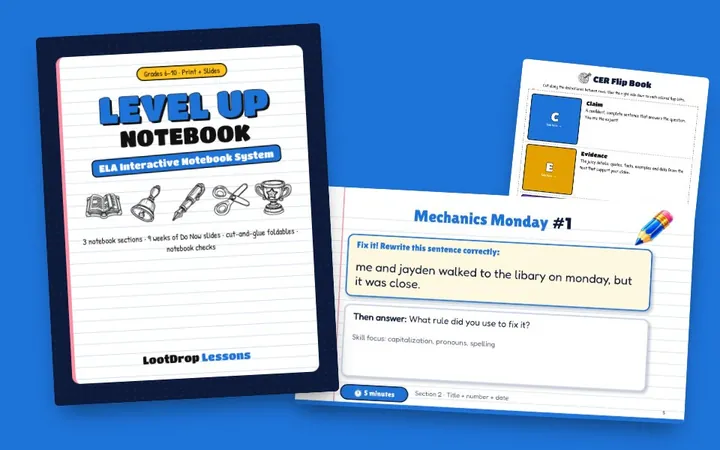
Seatcraft is my free seating chart maker: build your room, shuffle students and print the chart, and the names never leave your browser. The Classroom Rules Presentation Template is an editable deck for the procedures reboot, and the Level Up Notebook gives you a three-section notebook setup with daily Do Now slides. For fresh writing routines, my journal prompt collection and Paragraph of the Week prompts are below, along with Two Truths and a Lie for welcoming new students.