How to Write a Sub Plan Teachers Can Actually Use (Plus Easy Sub Day Activities)
 Andy Navarro · Classroom & Free Tools ·
How to write a sub plan your substitute can actually follow, what goes in an emergency sub folder, and easy sub day activities that keep class calm.
Every teacher has written a sub plan at 10 p.m. with a fever, and every teacher has come back to a note that says "the class was a little wild." Knowing how to write a sub plan that a stranger can follow is a real skill, and it's one that pays off every single time you're out.
The secret is simple: write for someone who has never been in your room, doesn't know your students and has five minutes to read before the bell. Here's how I put mine together.
What a good sub plan does
A sub plan has three jobs:
- Keep students safe. Procedures, emergencies and who to call for help.
- Keep students working. Clear, doable tasks that don't need you there to explain them.
- Tell you what happened. A way for the sub to report back on attendance, behavior and what got done.
If your plan does those three things, it's a good plan, even if the lesson itself is simple.
Step 1: Build the sub folder once
Most of what a sub needs doesn't change from day to day. Put it in a sub folder (or binder) at the start of the year, and you'll only have to write the daily lesson part when you're out.
Your sub folder should include:
- Your schedule: bell times, lunch, planning period and any duties the sub needs to cover.
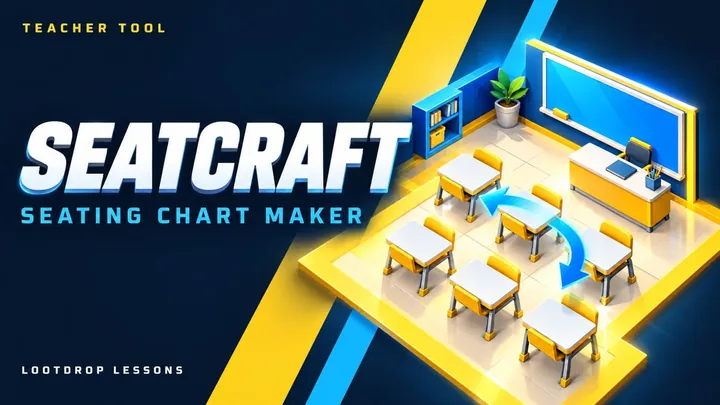
- Seating charts for every class. This is the single most helpful thing you can leave. A sub who can call students by name has a much easier day.
- Class rosters with a way to take attendance.
- Emergency procedures: fire drill route, lockdown steps and where the emergency folder lives.
- Student notes: allergies, medical needs, accommodations and students who should not be sent out of the room together. Keep these private and brief.
- Helpers: the teacher next door, the front office extension and two or three reliable students per class.
- Routines: how students enter, where materials are, the hall pass procedure and what to do if a student finishes early.
- Technology notes: how to turn on the projector, or a clear note that no tech is needed.
Step 2: Write the daily plan in plain steps
This is where most sub plans go wrong. Teachers write the plan the way they'd think about it ("finish the discussion from Tuesday") instead of the way a stranger would need to read it. A good daily plan is a numbered list with times:
- First 5 minutes: take attendance using the seating chart. Students complete the warm-up on the board.
- Next 10 minutes: pass out the handout from the blue folder. Read the directions aloud.
- Next 25 minutes: students work independently or with a partner. Collect the handout at the end.
- Last 5 minutes: students put materials away and wait at their seats for the bell.
Be specific about where things are and what to collect. "Handouts are in the blue folder on my desk, labeled 2nd period" beats "handouts are on my desk" every time.
Step 3: Pick work that works without you
The best sub day lesson is meaningful but not brand new. A sub can't teach a new concept the way you would, and students know it. Good options:
- Practice on a skill you've already taught, like a reading passage with questions or a short constructed response.
- Independent reading with a response, such as a one-page reflection or a quote analysis.
- A video with guided questions, if you're sure the tech will work.
- Review for an upcoming test.
Avoid anything that depends on a discussion only you can lead, a lab with safety risks or a group project with roles students haven't practiced. Always add a "finished early?" task so nobody sits with nothing to do.
Whatever you choose, collect it. Students take sub work seriously when they know it counts and you'll look at it.
Step 4: Keep emergency sub plans ready
You won't always know in advance that you'll be out. Keep two or three emergency sub plans in your folder that work any day of the year. They should be general enough to fit any unit: a reading passage with questions, a writing prompt or a skills review. Make the copies ahead of time, and refill the folder whenever you use one.
Easy sub day activities that build community
Sometimes the best plan for a sub day isn't more content. It's a low-stakes activity students already know how to do, so the sub isn't fighting the room. These work well on a short absence, a half day or a day when the sub is covering for you on short notice.
Two Truths and a Lie. It works on a sub day because the rules take ten seconds to explain. Every student writes three statements about themselves, two true and one false. In small groups, students take turns reading theirs while the others guess the lie. To make it a writing task, have each student finish by writing a paragraph about the truth their group found most surprising. Collect the paragraphs.
Beach ball questions. If your sub is comfortable with a little movement, a beach ball with questions written on it is an easy energy boost. Whoever catches it answers the question under their right thumb. Leave the sub a note on how long to play (ten minutes is plenty) and what to do next.
Quick reflection. End the period with a short exit ticket: "What's one thing you learned today and one question you still have?" It gives you something to read when you're back and shows students the day mattered.
Step 5: Get a report back
Leave a simple form for the sub to fill out: who was absent, who was helpful, any problems, what got finished and anything you need to know. Ask for names, both good and bad. Then follow up. Thank the students who helped, and handle any issues the next day so students learn that sub days still count.
Rewarding the class that does it right
A small reward system makes a good sub report worth something to students. Some teachers give the class a point toward a goal when the sub leaves a positive note. Others recognize individual students the sub named as helpful.
A Get Out of Jail Free card is one fun option. Mine are built to reward students who bring in a supply the class needs, like tissues or pencils, which also keeps the room stocked for sub days.
The sub plan checklist
- Sub folder with schedule, seating charts, rosters and emergency procedures
- Daily plan in numbered steps with times
- Materials labeled and in a place that's easy to find
- A "finished early?" task
- Two or three emergency plans ready to go
- A report form for the sub
Resources to make it easier
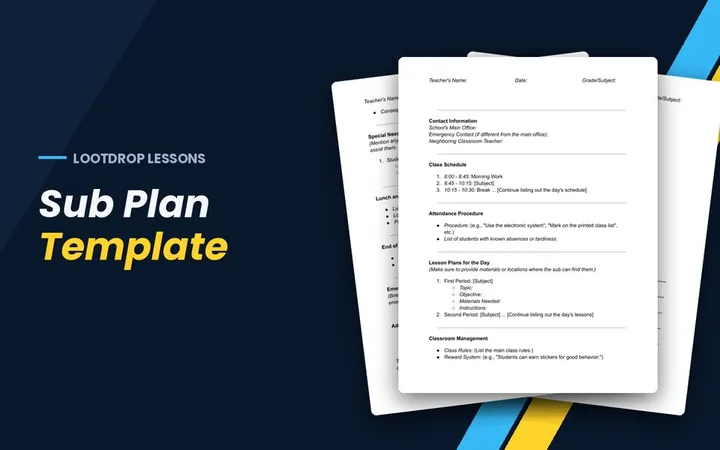
My free sub plan template is an editable doc that puts everything your substitute needs in one place. For seating charts, Seatcraft is my free seating chart maker. It prints charts and rosters and lets you add a note for the substitute right under the chart. And if you want a sub day activity ready to project, my Two Truths and a Lie slide game, the beach ball question sets and the Get Out of Jail Free cards are all below.