
"The Tell-Tale Heart" Short Story Unit Plan: 2-Week Pacing for Grades 7–10
 Andy Navarro · Short Stories & Literature · · 4 min read
A day-by-day Tell-Tale Heart unit plan for middle and high school: hook, reading, unreliable narrator, symbols, mood, author's craft, SCR and ECR assessment.
"The Tell-Tale Heart" is short enough to read in one class period and rich enough to carry two full weeks. That's why it shows up in so many 7th through 10th grade classrooms every October. This post lays out a complete Tell-Tale Heart short story unit plan, day by day, with a middle school track and a high school track so you can run it at the right level for your students.
If you want the deep dive on the core lesson (putting the narrator on trial), read How to Teach The Tell-Tale Heart. This post is the big-picture pacing.
What the unit is built around
Every day connects back to one guiding question: Can you trust a narrator who keeps telling you he's sane? Keeping one question all unit gives struggling readers an anchor and gives strong readers a target for their writing. The skills students practice along the way:
- Unreliable narrator and point of view
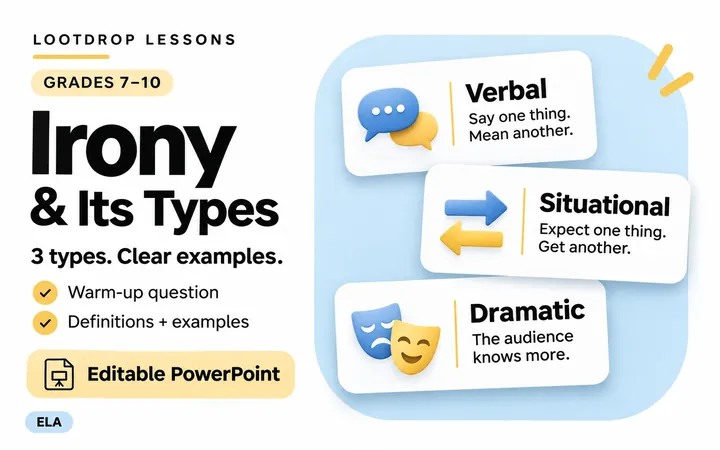
- Irony (verbal, situational and dramatic)
- Mood, and how it shifts from calm to frantic
- Symbolism: the eye, the heartbeat, the lantern and the planks
- Author's craft: Poe's dashes, repetition and pacing
- Text evidence for short and extended constructed responses
Week 1: read, question, collect evidence
Day 1: Hook and background
Start with an anticipation guide (statements like "People always know when they're lying to themselves") and a short journal prompt. Then give five minutes of background: Poe published the story in 1843, he believed a story should build one "single effect," and this is Gothic fiction. Keep it brief. The story does the rest.
Day 2: Irony and reliability
Teach the three types of irony with quick, modern examples, then ask the question that drives the unit: what makes a narrator trustworthy? Students list clues they'd look for, like contradictions, bragging and overreacting.
Days 3–4: Read in three parts
Read aloud or play an audio version and stop at three breaks: the narrator's defense and the eye, the eight nights and the murder, and the police visit and confession. Students complete a reading guide for each part. If you have mixed readers, give versions of the text with the same paragraph numbers so everyone can join the same discussion.
Day 5: Evidence and foreshadowing
Students hunt for lines where the narrator's claims and his actions don't match, and track foreshadowing (the heartbeat, the "Evil Eye," the lantern). End the week with a short comprehension quiz.
Week 2: analyze, discuss, write
Day 6: Mood shift
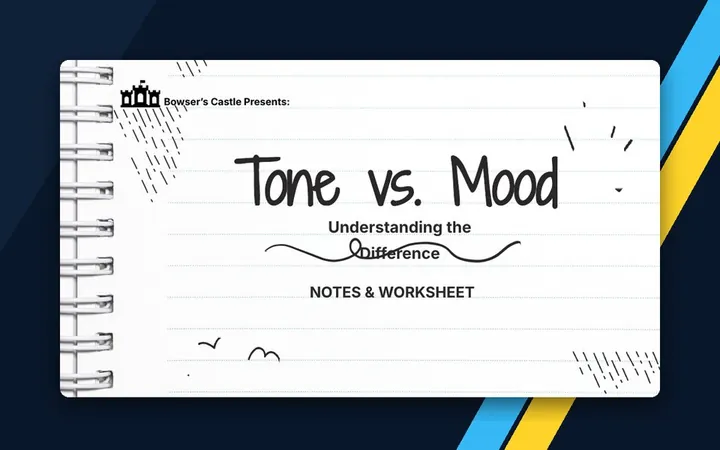
Students plot the mood across the story, from the narrator's eerie calm to the frantic ending, and pick one sentence that marks each turn.
Day 7: Symbols
Small groups take one symbol each, find a line that supports their reading, and teach it to the class. The eye and the heartbeat always spark debate, and that's the point. For a station day instead, Beneath the Boards has eight analysis stations, including one on symbols and one on tone vs. mood.
Day 8: Track your level
- Middle school: focus on guilt and conscience. Pair the story with a short nonfiction article about what stress and guilt do to the body, then connect it back to the heartbeat.
- High school: read about Gothic fiction and the insanity defense, which was being argued in courts in Poe's own time. Try more than one interpretation of the narrator, or apply a critical lens.
Day 9: Author's craft and discussion
Put one paragraph on the board and have students mark dashes, exclamation points, repetition and short sentences. Then hold a seminar or a four corners debate on the big question: is the narrator lying to us, or does he really believe he's sane? High schoolers can also argue whether he should be held responsible.
Day 10: Assess
Give a unit test with STAAR-style multiple choice plus a short constructed response. A strong SCR prompt: How does Poe show that the narrator is unreliable? For an extended response, middle schoolers write an informational ECR; high schoolers write a literary analysis or argument.
Differentiation that keeps everyone in the same conversation
- Give struggling readers a modified version of the story with matching paragraph numbers.
- Use an annotated version for students who need vocabulary support (dissimulation, sagacity, vex, hearken).
- Give a note-taking version to students who are ready to annotate on their own.
- Offer a project menu at the end so students can show understanding in more than one way.
Want a second spooky story?
If you want to extend into a full October suspense unit, pair Poe with "The Landlady" or "Lamb to the Slaughter," or let students choose from a set of original scary stories. The Lamb to the Slaughter and The Landlady guide has ideas for teaching both.
Questions teachers ask
How long should a Tell-Tale Heart unit be?
Most teachers spend one to two weeks. One week covers the reading, the unreliable narrator lesson and a quiz. Two weeks adds symbolism, mood, author's craft, a seminar and a full written assessment.
What grade level is The Tell-Tale Heart?
It's most often taught in grades 7 to 10. Middle school classes focus on plot, mood and guilt; high school classes go deeper into Gothic fiction, craft and interpretation.
What skills does The Tell-Tale Heart teach?
Unreliable narrator, irony, mood, symbolism, foreshadowing and author's craft. It's also great practice for citing text evidence in short constructed responses.
Is The Tell-Tale Heart appropriate for middle school?
Yes, with a quick heads-up that the story includes a murder. The violence is mostly implied, and the focus stays on the narrator's mind and how Poe builds suspense.
The complete Tell-Tale Heart unit below has everything in this plan ready to print: the story in four versions, reading guides, the trial and evidence pages, symbols, mood, both tracks, unit tests, SCRs, ECRs and two slide decks.



Comments
Questions, tweaks that worked in your room, ideas for other teachers: share them here.
Loading comments...