How to Teach The Scarlet Ibis: Symbolism, Theme and ECR Writing
 Andy Navarro · Short Stories ·
How to teach The Scarlet Ibis: track symbolism, build theme statements about pride and love, and guide students to a strong ECR essay.
If you're figuring out how to teach "The Scarlet Ibis," know this going in: it's the story that makes students quiet. James Hurst's story about two brothers, one born with a disability and one who pushes him too hard, is full of symbolism and lands on a theme every teenager understands. It's also one of the best stories I know for moving students from noticing symbols to writing a real extended constructed response.
Here's how I teach it, step by step.
Quick background for you
- James Hurst published "The Scarlet Ibis" in The Atlantic Monthly in 1960.
- The story is set in the coastal South in 1918, near the end of World War I. The war comes up in the background, and it matters.
- The narrator is the older brother, telling the story as an adult looking back. He is never named.
- His little brother is William Armstrong, nicknamed Doodle because he crawled backward like a doodlebug.
- The story is under copyright, so use your anthology or a licensed copy.
Pre-reading: pride and the people we love
I start with a quick-write: Have you ever pushed someone to do something partly for them and partly for yourself? Think of a parent at a little league game, or a friend who wants you to look good so they look good.
Students share and someone always says it out loud: you can love someone and still be selfish with them. That's the seed for the whole story.
I also front-load one idea: the narrator is looking back with regret. When students know from the start that this is a memory told by someone who feels guilty, they read every scene differently.
Reading in four chunks
- The opening and Doodle's birth: the narrator remembers the bleeding tree and the summer, then tells how no one expected Doodle to live and a small coffin was built for him. Stop and ask: How does the narrator feel about Doodle at first? Why does he tell us so honestly?
- Learning to walk: the narrator teaches Doodle to walk, mostly because he's embarrassed by him, and the family celebrates. Stop and ask: Is this a proud moment or a selfish one? Can it be both?
- The plan and the ibis: the brother sets a schedule to make Doodle "normal" before school, the scarlet ibis lands in the bleeding tree and dies, and Doodle buries it. Stop and ask: What connects Doodle and the bird?
- The storm: the final practice, the storm, the narrator running ahead, and what he finds under the nightshade bush. Read straight through.
Give students two minutes of silence to write a reaction before anyone talks. They'll need it.
Teaching symbolism in The Scarlet Ibis
This story is packed with symbols, and students can find most of them with a little help. I put them in small groups, give each group one symbol and three questions: What is it? Where does it show up? What could it stand for?
- The scarlet ibis: a rare, beautiful bird blown far from home by a storm, unable to survive where it lands. It mirrors Doodle: fragile, special and out of place in a world that wasn't built for him.
- The bleeding tree: it appears at the start and again when the ibis dies. It connects to death and to the red that runs through the story.
- The color red: the ibis, the bleeding tree, the nightshade and the ending. Have students track every red detail.
- The coffin: built for a baby who wasn't supposed to live. Doodle is frightened by it later, and it hangs over the whole story.
- Old Woman Swamp: the brothers' private paradise, where Doodle is happiest and freest.
- The war: battles far away are mentioned while the narrator pushes Doodle. Many readers see a parallel between the war's destruction and what pride does between the brothers.
Groups teach their symbol in two minutes. Then I ask the class: If the narrator compares Doodle to the ibis at the end, what is he admitting? That question gets them to theme.
Themes worth teaching
The narrator himself says pride is a wonderful and terrible thing, a seed that bears two vines. I put that idea on the board and ask students what the two vines are in the story. Pride helps Doodle walk. Pride also leads to the ending.
Themes students can build from the text:
- Pride can drive us to do good things and destroy what we care about.
- Love and cruelty can exist in the same relationship.
- Trying to make someone fit our idea of normal can cost them.
- Regret can last a lifetime.
I teach students the difference between a topic and a theme with a simple test. "Pride" is a topic. "Pride can make us hurt the people we love most" is a theme. If it's one word, it's not finished.
Character: is the narrator a good brother?
This is the discussion that runs the whole period. I give students a T-chart: Moments he's loving on one side and moments he's cruel on the other. They'll find plenty for both: teaching Doodle to walk, pulling him in the go-cart, taking him to the swamp, and also showing him the coffin, pushing him past his limits and leaving him in the storm.
Then the question: Is the narrator responsible for what happens to Doodle? Students have to point to the chart to argue. This also sets up a character analysis essay nicely, since both brothers change over the story.
From discussion to ECR
By the end of the week, students have symbol notes, a theme statement and a character chart. That's everything they need for an extended constructed response. I walk them through it in four steps:
- Pick a prompt and write a clear thesis. For example: "In 'The Scarlet Ibis,' Hurst uses the ibis to show that Doodle was too fragile for the world his brother tried to force him into."
- Choose two strong pieces of evidence. Short quotes or specific paraphrased moments from their notes, not long passages.
- Explain each piece. Two or three sentences on how the evidence proves the thesis. This is where most of the points live.
- Close by connecting back to the theme. One or two sentences, no new evidence.
Prompts that work well:
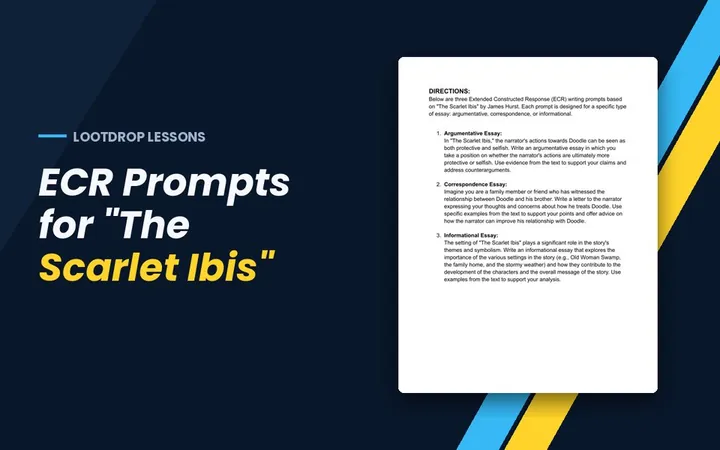
- How does Hurst use symbolism to develop the theme of the story?
- Argue whether the narrator is more responsible for Doodle's death or whether other forces are to blame.
- Write a letter from the adult narrator to Doodle explaining what he understands now.
Tips that help
- Talk briefly and respectfully about disability before reading. Doodle is a full person, not a symbol only, and students should see that.
- Pre-teach a few words (iridescent, infallibility, imminent, vermilion) so the descriptive passages don't slow anyone down.
- Reread the opening paragraph after finishing. Students catch details they skipped right past the first time.
- Give the ending room. Some students will connect it to their own families, and that's fine.
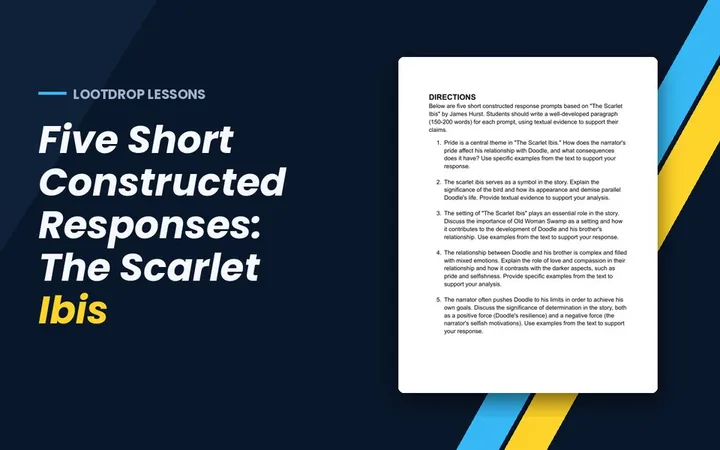
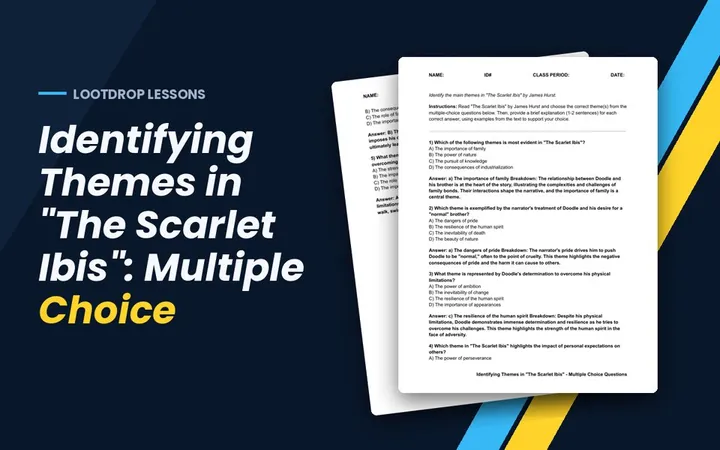
If you want ready-made materials, the resources below include five SCR prompts, ECR prompts in three modes, a multiple-choice theme check, a character analysis body outline with a rubric, and a personal reflection essay that connects a theme from the story to students' own lives.