The Lottery Lesson Plan: Teaching Irony and Symbolism in Middle and High School
 Andy Navarro · Short Stories ·
A Lottery lesson plan for irony and symbolism in Shirley Jackson's story, with pre-reading, a 3-chunk read and tips for middle vs high school.
Every year, "The Lottery" is the story my students still bring up in May. If you're putting together a Lottery lesson plan, you're working with one of the best short stories ever written for teaching irony and symbolism. The ending hits hard, and once students know it, they want to go back and see how Shirley Jackson set them up. That rereading is where the real learning happens.
Here's how I teach it, plus what I change for middle school versus high school.
Quick background for you
- Shirley Jackson published "The Lottery" in The New Yorker in June 1948.
- The magazine got a flood of letters afterward. Many readers were angry or confused, and some asked where these lotteries took place.
- The story is set on a summer morning in a small village of about three hundred people, where everyone gathers in the square for an annual tradition.
- It's under copyright, so use your anthology or a licensed copy.
Day 1: pre-reading without spoilers
The worst thing you can do with this story is give away the ending. So my pre-reading is all about the theme, not the plot.
I start with a quick write: Describe a tradition in your family or community. Do you know where it came from? Would you ever stop doing it? Students share, and someone always realizes they do a tradition every year without knowing why.
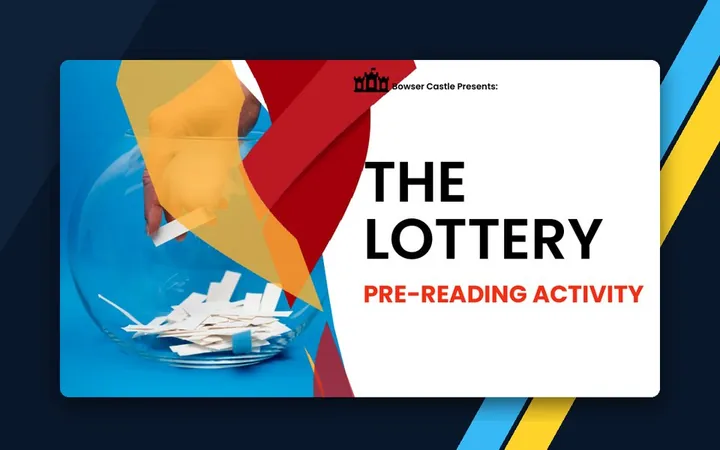
Then I run a short game where students get slips with made-up traditions and work in groups to invent a backstory for one. It gets them talking about how traditions start, how they change, and why people keep them going. We end with one question: What happens when nobody remembers why we do something, but we keep doing it anyway?
That's the seed. Students walk in the next day ready to read, with no idea what's coming.
Day 2: read in three chunks
I read the story aloud and stop twice. The breaks I use:
- The gathering: the kids collecting stones, the villagers arriving, the black box and Mr. Summers. Stop and ask: What's the mood right now? What feels off?
- The drawing: families called up, slips drawn, Tessie Hutchinson's protests begin. Stop and ask: What do you predict? What clues support it?
- The ending: read straight through. Don't stop. Let the silence sit for a second before anyone talks.
After the read, I give students two minutes to write their honest first reaction before any discussion. Some are shocked, some are angry, and a few will say they saw it coming. All of that is useful.
Teaching irony in The Lottery
Students usually know the word irony but can't explain the types. This story gives you a clean example of each.
- Situational irony is the big one. A lottery usually means someone wins a prize. Here, "winning" means death. The cheerful summer setting, flowers and kids playing set up an ending that's the opposite of what we expect.
- Dramatic irony shows up on a reread. Once students know the ending, the early details (the stones, the nervous jokes, the men keeping their distance from the stone pile) mean something the characters don't seem to acknowledge out loud.
- Irony in character comes through Tessie. She arrives late and joking, part of the crowd. She only protests that the process isn't fair once her own family is chosen. Students catch this fast: she had no problem with the lottery when it was someone else.
The move that makes irony click: have students reread the first page after finishing the story and highlight every detail that seems innocent the first time and sinister the second. They'll find more than you expect, and they'll be explaining foreshadowing and situational irony without you having to lecture.
Teaching symbolism in The Lottery
I give each small group one symbol and three questions: What is it in the story? What details describe it? What could it represent?
- The black box: it's shabby, splintered and faded, but nobody wants to replace it. It stands for the tradition itself: worn out, but people are scared to change it.
- The stones: the children gather them first, which shows how violence gets passed down to the next generation.
- The slips of paper: they replaced the original wood chips. The village changed the details of the tradition but kept the cruel part.
- Old Man Warner: not an object, but he works like a symbol of blind loyalty to tradition. He has been part of the lottery for decades and scorns any town that talks about quitting it.
- The names: Mr. Summers, Mr. Graves, Delacroix. A lot of readers see meaning in them, and students enjoy debating whether Jackson chose them on purpose.
Each group teaches their symbol in two minutes. Then we zoom out: if all these symbols work together, what is Jackson saying? That leads straight to theme.
From symbols to theme and allegory
I ask students to finish this sentence in their own words: Jackson suggests that when people follow tradition without questioning it...
Strong answers name a consequence: cruelty becomes normal, people turn on their neighbors, nobody takes responsibility. That's a theme statement, and it's ready for a constructed response.
From there I introduce the idea of an allegory: a story where the characters and events stand for something bigger. Students brainstorm what the lottery could represent in real life: scapegoating, peer pressure, mob behavior, unfair systems people keep defending because they've always been there.
Adapting The Lottery lesson plan for middle vs high school
The story works for both, but the approach shifts.
For middle school (grades 7 and 8)
- Spend more time on the read. Use reading guides with questions at each chunk.
- Focus on situational irony and two or three symbols, not all of them.
- Connect the theme to something students live every day: going along with the group, even when they know something is wrong.
- Talk honestly about the violence and keep the focus on why the characters act the way they do.
- Pair it with a short nonfiction piece on conformity or peer pressure, then write an informational response.
For high school (English I and II)
- Go deeper on Jackson's craft: the flat, calm point of view, the plain diction, and how that matter-of-fact tone makes the ending more disturbing.
- Teach the story as an allegory and have students test a few readings (scapegoating, social conformity, blind tradition) against the text.
- Bring in historical examples of scapegoating so students see the pattern beyond fiction.
- Run a four corners debate: Is tradition worth keeping if nobody remembers why it started? Students move, defend, and can switch corners if someone convinces them.
- Finish with a literary analysis or argumentative essay.
Short constructed response practice
This story is ideal for SCR practice because students have so much to say. A few prompts I use as warm-ups the week after reading:
- What does the black box symbolize, and how does it support the theme?
- How does the setting create a mood that contrasts with the ending?
- How does Jackson use foreshadowing to build suspense?
- Why is the title "The Lottery" ironic?
I keep them short and frequent. One a day for a week builds more skill than one big essay.
A note on discussion
Students will want to talk about whether the villagers are evil. Push them past that. The more interesting question is why ordinary people go along with something terrible. That's where they start connecting the story to the real world, and that's the whole reason the story is still taught.
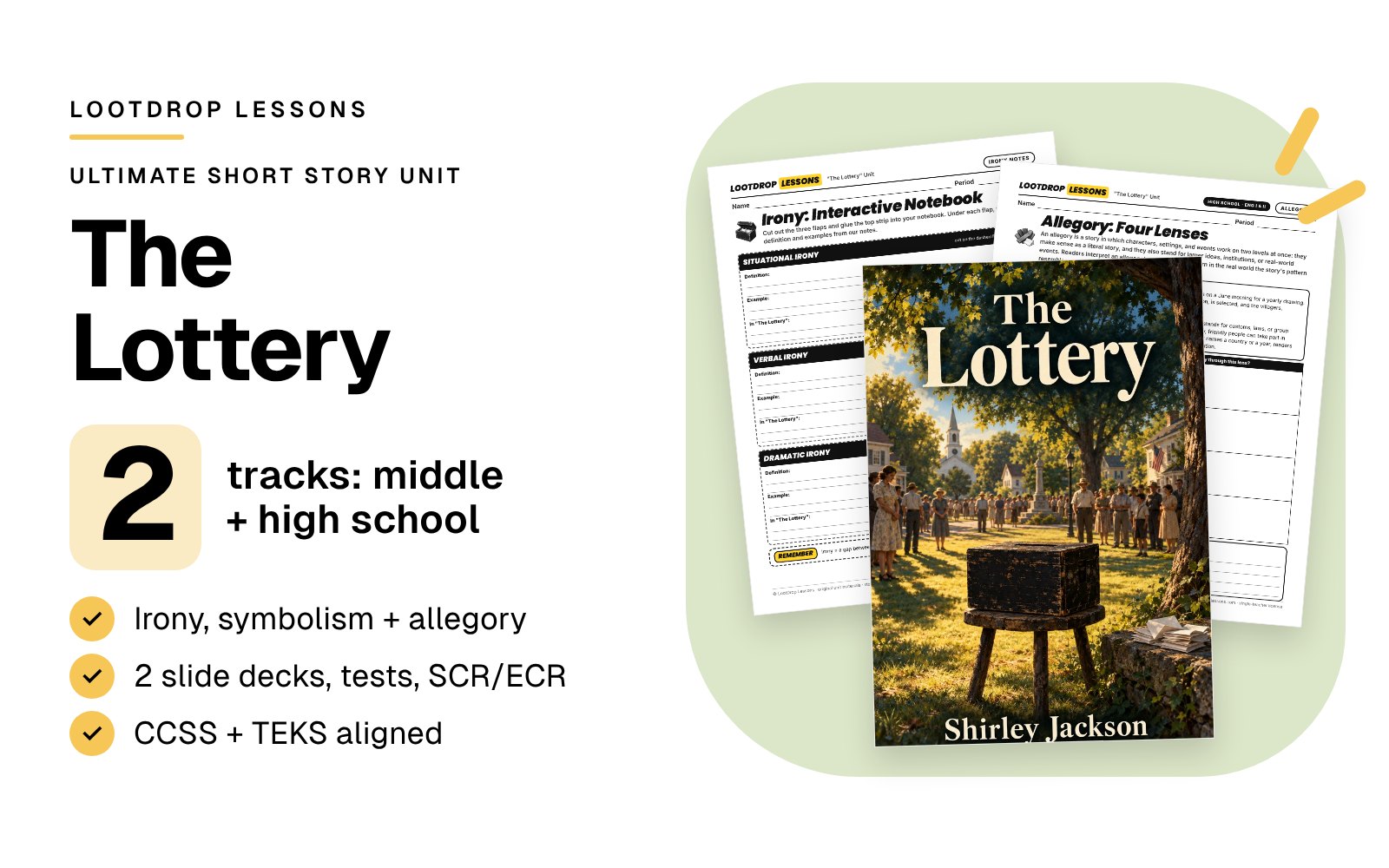
If you want my full setup, the pre-reading activity, SCR prompts and complete Lottery unit with separate middle and high school tracks are below. Everything works with any anthology copy of the story.