

Main Idea vs. Theme: How to Teach the Difference in 3rd, 4th and 5th Grade
 Andy Navarro · Reading Skills & Phonics · · 3 min read
Students mix up main idea and theme all the time. A simple test, anchor chart language and activities to help 3rd to 5th graders tell them apart.
Ask a class of fourth graders for the theme of a story and half of them will tell you what happened. Ask for the main idea and some will give you a life lesson. Both answers are "big picture" ideas, so it makes sense that kids blur them together.
The fix is a clear way to tell them apart and a lot of practice with the same texts. Here's how I teach it.
The difference in one sentence
- Main idea: what the text is mostly about.
- Theme: the lesson or message the author wants readers to take away about life.
Main idea stays inside the story. Theme travels outside of it. A main idea uses the characters' names. A theme doesn't need them.
The quick test that clears it up
Teach students to ask one question: Could this sentence be true about a different story with different characters?
- "Maya breaks her grandma's vase and tells the truth." Only true for this story. That's the main idea.
- "Telling the truth is the right choice, even when it's hard." True for lots of stories. That's a theme.
A small fact from the story, like "the cat was asleep on the couch," is just a detail. Adding that third category helps students see why details aren't the big picture either.
Anchor chart language
Build a two-column anchor chart with your class. Under Main Idea: "What is it mostly about?", "Uses names and events", "Sounds like a one-sentence summary." Under Theme: "What lesson does it teach?", "About life, not just this story", "Could fit many stories." Add one example under each from a story your class already knows.
Teach theme as a sentence, not a word
"Friendship" is a topic, not a theme. Push students to finish the thought: what about friendship? "Real friends stick with you when things get hard" is a theme. A sentence frame helps: The author wants readers to learn that ___.
Activities that build the skill
- Sort it. Give students three statements about a short story: a main idea, a theme and a detail. They sort them and explain the leftover detail.
- Same story, two answers. After a read-aloud, half the class writes the main idea and half writes the theme. Pairs compare and check each other with the quick test.
- Many stories, one theme. Show three short stories or fables with the same lesson. Students see how one theme fits different main ideas.
- Task cards. Short original stories on cards are perfect for centers, partner work or a quick daily warm-up.
Scaffold with choices first
Start with multiple choice: give the main idea, the theme and a detail, and have students identify each. Once that's easy, move to writing their own. Students who struggle can stay with choices longer while others write independently, using the same stories.
Common mistakes to watch for
- Theme as one word. Ask "What about it?" until it's a full sentence.
- Theme as a command. "Don't lie" is close, but themes are usually statements about life: "Lying usually makes things worse."
- Main idea as a detail. If it only covers one part of the story, it's not what the whole text is about.
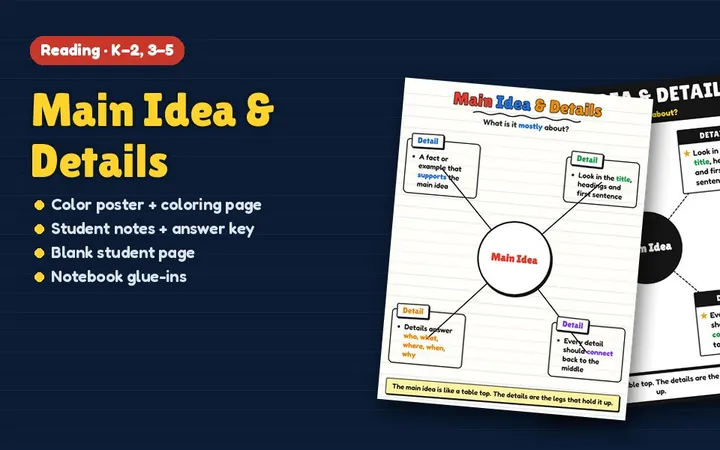
The resources below include 16 original stories with main idea and theme task cards, a main idea slideshow and anchor charts for both skills.
Questions teachers ask
What is the difference between main idea and theme?
The main idea is what a text is mostly about. The theme is the life lesson or message the author wants readers to learn. A main idea is specific to one story; a theme could fit many stories.
What grade do students learn theme?
Theme usually appears in reading standards around 2nd and 3rd grade and becomes a major focus in grades 4 and 5, when students are expected to determine theme and support it with details.
Is a one-word answer like "friendship" a theme?
No, that's a topic. A theme is a complete sentence about the topic, like "Real friends stick with you when things get hard."



Comments
Questions, tweaks that worked in your room, ideas for other teachers: share them here.
Loading comments...