
Teaching Symbolism with Kendrick Lamar's Super Bowl Halftime Show (Grades 8–12)
 Andy Navarro · Short Stories & Literature · · 3 min read
A lesson plan for analyzing symbolism and figurative language in Kendrick Lamar's Super Bowl LIX halftime show, with discussion questions for grades 8–12.
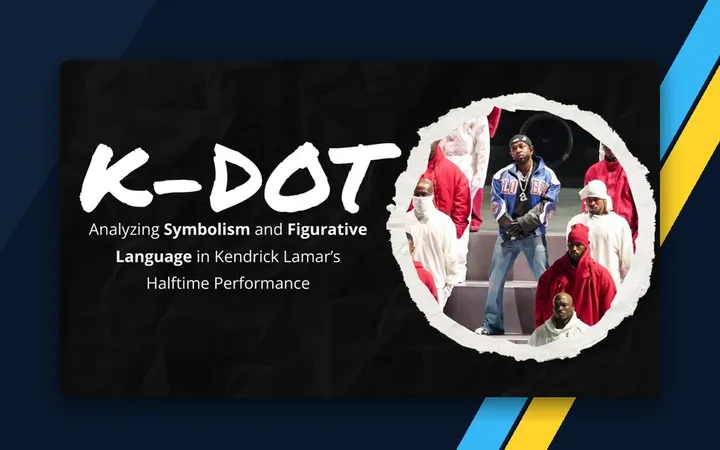
When Kendrick Lamar performed the Super Bowl LIX halftime show in February 2025, the conversation the next morning was about what it meant. A narrator dressed as Uncle Sam. Dancers in red, white and blue. A stage shaped like a game controller. Students argued about it in the hallway, which is exactly what we ask them to do with a poem.
That makes the performance a strong text for teaching symbolism, especially with students who are sure symbolism is something English teachers make up.
Why it works as a text
- The symbols are deliberate and visible. Costume, color, staging and casting are all choices, and students can see them.
- It rewards a second look. Like any good text, students notice more the second time.
- Students have background knowledge. For once, many of them know more than you about the artist. Let them be the experts on context while you teach the analysis.
- It bridges to the canon. The same moves, noticing, interpreting, supporting with evidence, apply to Poe and Shakespeare.
Before you teach it
- Preview everything. Watch the full performance and decide which segments fit your students and your school's guidelines. Use clean, official footage and read any lyrics you plan to display.
- Keep it on craft. The lesson is about how meaning is made, not about celebrity disputes. Set that frame at the start.
- Allow more than one reading. Students will disagree about what things mean. That is the point, as long as each reading is tied to evidence.
A two-day lesson
Day 1: notice.
- Quick write. What makes something a symbol and not just a thing?
- First viewing. Watch a selected segment once with no task.
- Second viewing with a chart. Three columns: what I see or hear, what it might stand for, what makes me think so. Students track staging, color, costume, the narrator and repeated images.
- Pair share. Compare charts and star the symbol they think matters most.
Day 2: interpret.
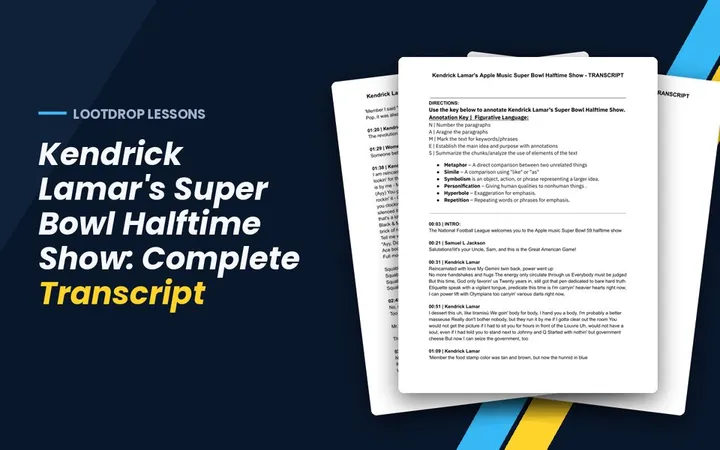
- Close read the words. Using a transcript, students mark figurative language: metaphor, allusion, repetition, wordplay.
- Discussion. Use the questions below. Require evidence for every claim.
- Write. A paragraph or a one-pager: one symbol, what it represents, and two pieces of evidence from the performance.
Discussion questions
- Why open with a figure like Uncle Sam? What does that character usually represent, and how is it used here?
- What do the colors of the dancers' clothing suggest, and how does their arrangement on stage add to it?
- The stage is designed like a video game controller. What could the idea of a "game" mean in this performance?
- Who is the audience for this performance? Is there more than one?
- Which symbol do you think is the most important? What would be lost without it?
- How is analyzing a performance different from analyzing a poem? What stays the same?
Pair it with literature
Follow the lesson with a text from your curriculum and the same three-column chart. Students who just tracked color and staging in a halftime show can track the black box in "The Lottery" or the bird in "The Scarlet Ibis" with far less resistance.
Questions teachers ask
Is this appropriate for school?
That depends on your students and your school. Preview the performance, choose segments carefully, and check your guidelines for media in class.
What grades does this work for?
Grades 8 through 12. It fits well in a unit on symbolism, rhetoric or media literacy.
When should I teach it?
The week of the Super Bowl is a natural hook, and so is Black History Month. It also works any time you introduce symbolism.
If you want the materials ready, I have three pieces for this lesson: a symbolism and figurative language analysis, a one-pager, and a timestamped transcript for close reading. Used together they come with a set discount in the shop.



Comments
Questions, tweaks that worked in your room, ideas for other teachers: share them here.
Loading comments...