

Simile and Metaphor Activities for 3rd to 6th Grade (That Go Beyond Spotting "Like" or "As")
 Andy Navarro · Writing & Grammar · · 3 min read
Teach similes and metaphors so students explain what a comparison means, not just label it. Mini-lessons and activities for grades 3 to 6.
Most students can spot a simile by fourth grade: it has "like" or "as." The harder part, and the part tests ask about, is explaining what the comparison means. "The classroom was a zoo" isn't about animals. Students need to figure out what the writer is really saying.
Here's how I move students from labeling to understanding.
Similes and metaphors in plain words
- Simile: compares two different things using like or as. "Her smile was as bright as the sun."
- Metaphor: says one thing is another. "Her smile was the sun."
Both compare two unlike things to help the reader see, hear or feel something more clearly. The only difference is the word that signals it.
The three-step routine
Every time students meet a comparison, they answer three questions:
- Simile or metaphor? Look for like or as. If it's missing and one thing is said to be another, it's a metaphor.
- What two things are compared? Name both. In "The snow was a soft white blanket," it's snow and a blanket.
- What does it mean? What do the two things have in common? The snow covered everything smoothly, like a blanket.
Step three is where the learning happens. Spend most of your time there.
Watch out for "like" that isn't a simile
"I like pizza" and "It looks like rain" use like but don't compare two unlike things. Give students a few of these on purpose. Deciding why they aren't similes deepens the definition.
Activities that work
- Task cards. One sentence per card: students decide simile or metaphor, name the two things compared and explain the meaning. Great for centers or scoot.
- Flip it. Students turn a simile into a metaphor and back again: "The hallway was as loud as a stadium" becomes "The hallway was a stadium."
- Picture it. Students illustrate the literal meaning of a metaphor next to what it really means. The silly drawing makes the real meaning stick.
- Hunt in real texts. Students find similes and metaphors in a novel, poem or song lyric they choose and explain one.
- Write your own. Give a topic, like winter or a busy morning, and have students write one simile and one metaphor about it.
Add a seasonal twist
December is a great time for figurative language practice because winter and holiday images are full of comparisons: icicles like glass daggers, snowflakes that are tiny dancers, a house that glows like a lantern. Seasonal sentences keep students engaged right before break while still practicing a real skill.
Connect it to writing
Once students can explain comparisons, ask them to use one in their own writing on purpose. In a narrative or descriptive paragraph, require one simile or metaphor that helps the reader picture something important. Then have a partner explain what it means. If the partner can't, the comparison needs work.
How to assess it
Skip the quiz that only asks students to label. Give three sentences and ask students to identify each comparison, name the two things compared and explain the meaning in their own words. That shows real understanding.
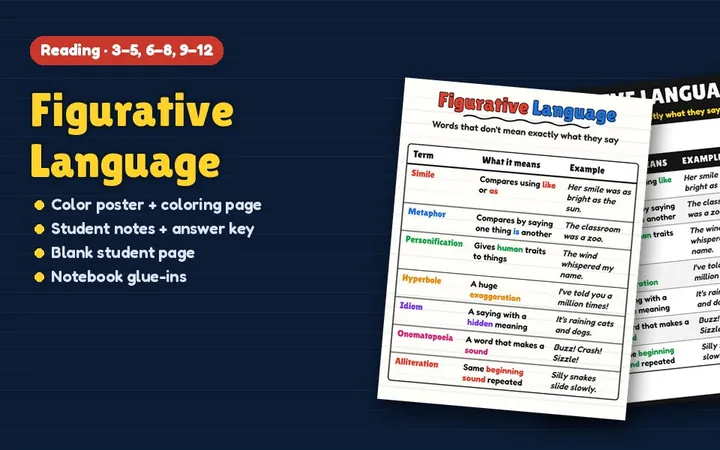
The resources below include 32 Christmas simile and metaphor task cards with a support set and digital slides, plus a figurative language anchor chart.
Questions teachers ask
What is the difference between a simile and a metaphor?
A simile compares two unlike things using "like" or "as." A metaphor makes the comparison directly by saying one thing is another, without "like" or "as."
What grade do students learn similes and metaphors?
Students are usually introduced to similes and metaphors around 3rd and 4th grade, and they explain their meaning in more depth in grades 5 and up.
How do you help students explain what a metaphor means?
Have them name the two things being compared, then ask what those two things have in common. That shared quality is what the writer is really saying.



Comments
Questions, tweaks that worked in your room, ideas for other teachers: share them here.
Loading comments...