
Handwriting Practice Kids Don't Hate: A 5-Minute Daily Routine

Handwriting practice that kids don't hate: a 5-minute routine, letter families, simple self-checks and copy work that's worth reading.
Most kids don't hate handwriting. They hate handwriting practice: twenty minutes of copying the same letter down a page while their hand cramps and nothing feels like it's getting better. The fix isn't more practice. It's shorter, smarter handwriting practice with a clear target and a way for kids to see their own progress.
Here's a routine that takes about five minutes a day, works from kindergarten through middle school, and doesn't turn into a fight.
Why short handwriting practice beats long copy sessions
Handwriting is a motor skill, like dribbling a ball. Motor skills improve with short, focused reps done often. A long session mostly gives a tired hand time to practice sloppy habits.
Five minutes a day, done carefully, does more than a weekly half hour. It also fits anywhere: a bell ringer, the transition after recess, the first thing in writing time.
And handwriting still matters, even with laptops. When letter formation is automatic, students can put their attention on ideas and spelling instead of on how to make a g. Slow, effortful writing usually means shorter, simpler writing.
The 4-step handwriting routine
- Model. Write the first line on the board while you say the path out loud: "Start at the top line, pull down, back up, hump over." Kids need to hear the stroke, not just see it.
- Trace. Students trace the gray model slowly. Speed is the enemy here. Tracing is about feeling where the letter starts and which way it moves.
- Write. Students write it on their own on the next line.
- Check. Students check their own work against a short list and circle their best letter or word.
That last step is what makes kids buy in. Circling their best one gives them something to aim for, and it's a lot more motivating than a page of red marks.
Teach the lines before the letters
A lot of messy handwriting is really a sizing problem. Kids don't know where letters are supposed to sit. Give the lines names and use them every day:
- Top line: tall letters and capitals touch it.
- Dashed middle line: small letters like a, c, e, m, n and o reach it.
- Baseline: everything sits on it. Make it dark.
- Bottom line: tails on g, j, p, q and y drop down to it.
Use letter families, not ABC order
Teaching letters in alphabet order means jumping between totally different movements. Grouping letters that start the same way lets each one build on the last. Most mistakes come from starting in the wrong place, so families fix the start.
- Pull-down letters: l, t, i, j, k
- Curve letters: c, o, a, d, g, q, e, s (all start like a c)
- Hump letters: n, m, h, r, b, p
- Slant letters: v, w, x, y, z
- Cup letters: u, y
Curve letters are the big win. Once kids know a, d, g and q all start with a little c, a lot of strange-looking letters clean up fast.
The four self-checks
Give students the same four checks every day so they can grade themselves without you:
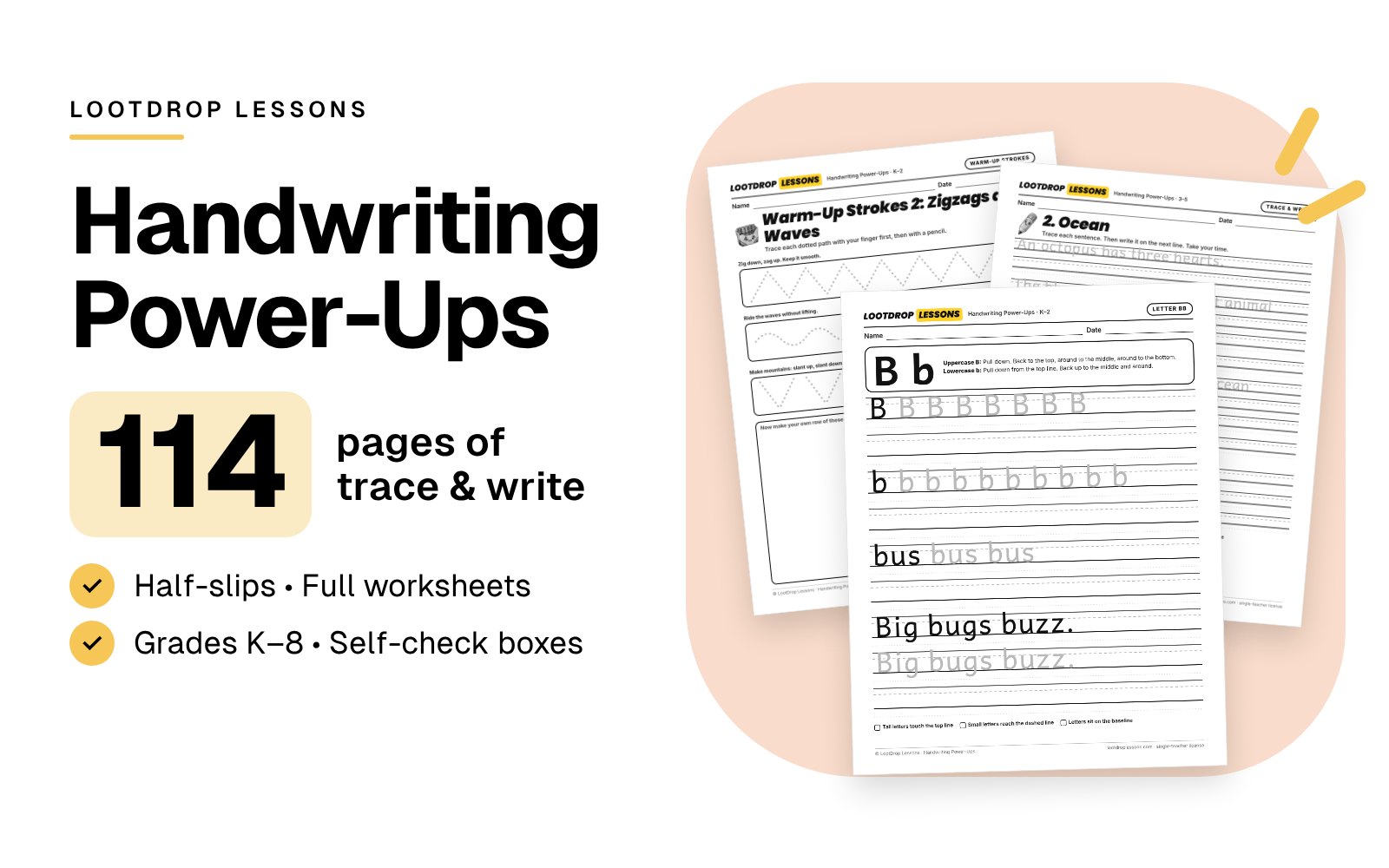
- Tall letters touch the top line.
- Small letters reach the dashed line.
- Letters sit on the baseline.
- There's a finger space between words.
Once a week, score one sample from each student out of four. You'll have a simple progress record, and kids can see their number go up, which is the motivation most handwriting practice is missing.
Quick fixes for common problems
- b and d reversals: b starts with a pull-down line. d starts with a c curve. Say it every time.
- Floating letters: trace the baseline with a highlighter so it's impossible to miss.
- Crowded words: use a finger, a craft stick or a "spaceman" to mark the space between words.
- Pressing too hard: try a soft surface under the paper or a thicker pencil.
- Tiny or giant letters: go back to bigger lines for a week, then step down in size.
- Grip trouble: short pencils and golf pencils naturally push kids toward a better grip. Writing on a vertical surface, like a whiteboard on the wall, helps too.
If a student's handwriting is still a real struggle after steady practice, check in with your school's occupational therapist. Some kids need more than a routine.
Make the copy work worth reading
Here's the part that changes how kids feel about it. If they're going to copy something, make it interesting. "The quick brown fox" is fine once. After that, it's filler.
- K-2: a letter, a word that starts with it and a short, silly sentence. "Big bugs buzz" beats a row of b's.
- Grades 3-5: one cool fact per day. Octopuses have three hearts. Snowflakes have six sides. Kids will read the fact out loud to whoever's next to them, which means they read it more than once.
- Grades 6-8: short paragraphs on topics worth knowing, like the first flight or the water cycle. Older students take neatness seriously when the writing has a purpose.
For middle schoolers, you can go one step further and pair handwriting with test prep. Have students read a short passage, trace a model short constructed response, then write their own answer with evidence. They practice neat writing and the answer format at the same time, which matters on paper tests where a grader has to read every word.
Ways to fit it in
- Bell ringer: one half-slip at the start of class, done in under five minutes.
- Centers or early finishers: a folder of full sheets.
- Intervention: pick practice by skill, not grade. A fourth grader who still reverses letters can use the K-2 pages without anyone needing to know.
- Homework: one sheet a week, with the self-check boxes filled in by the student.
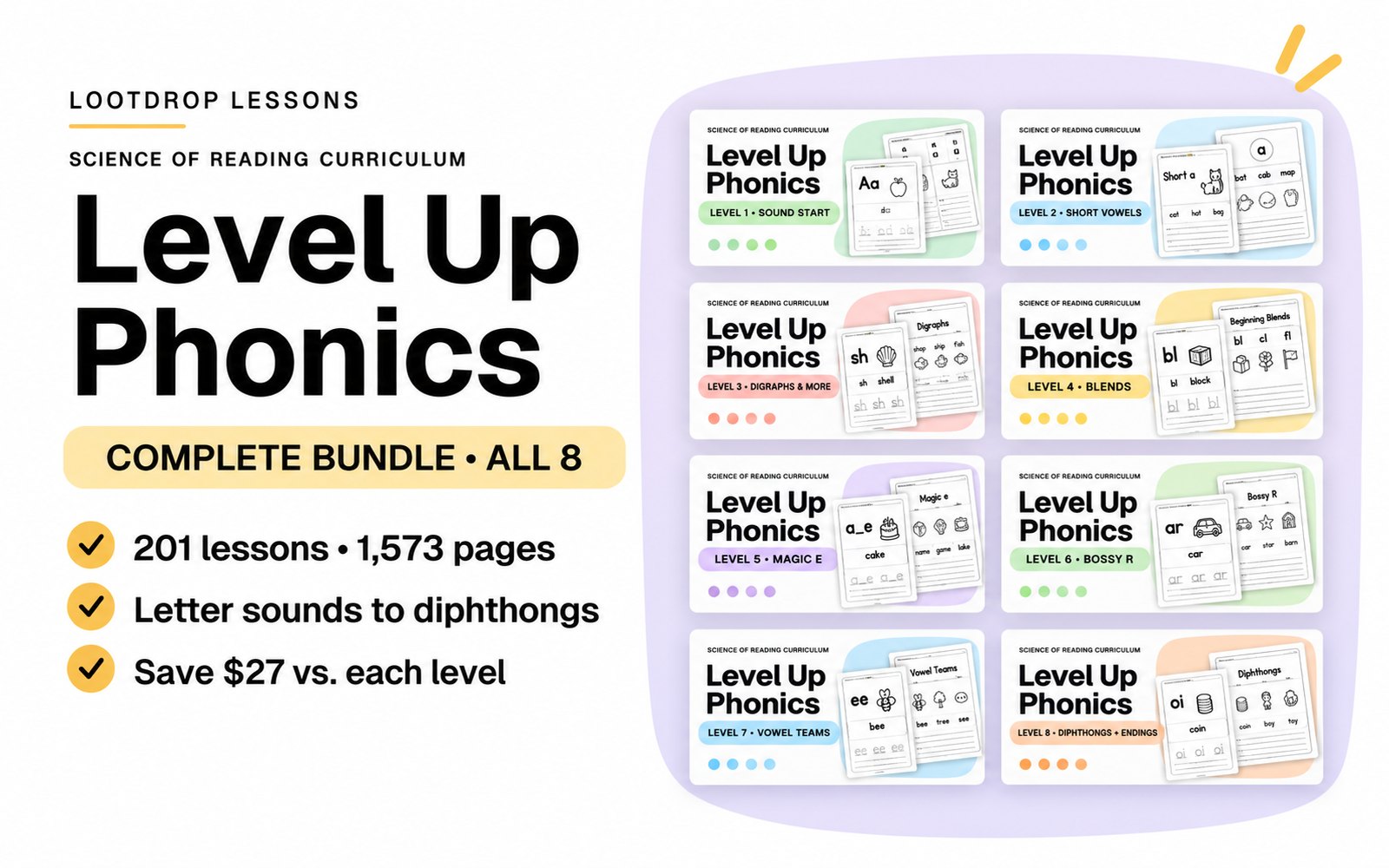
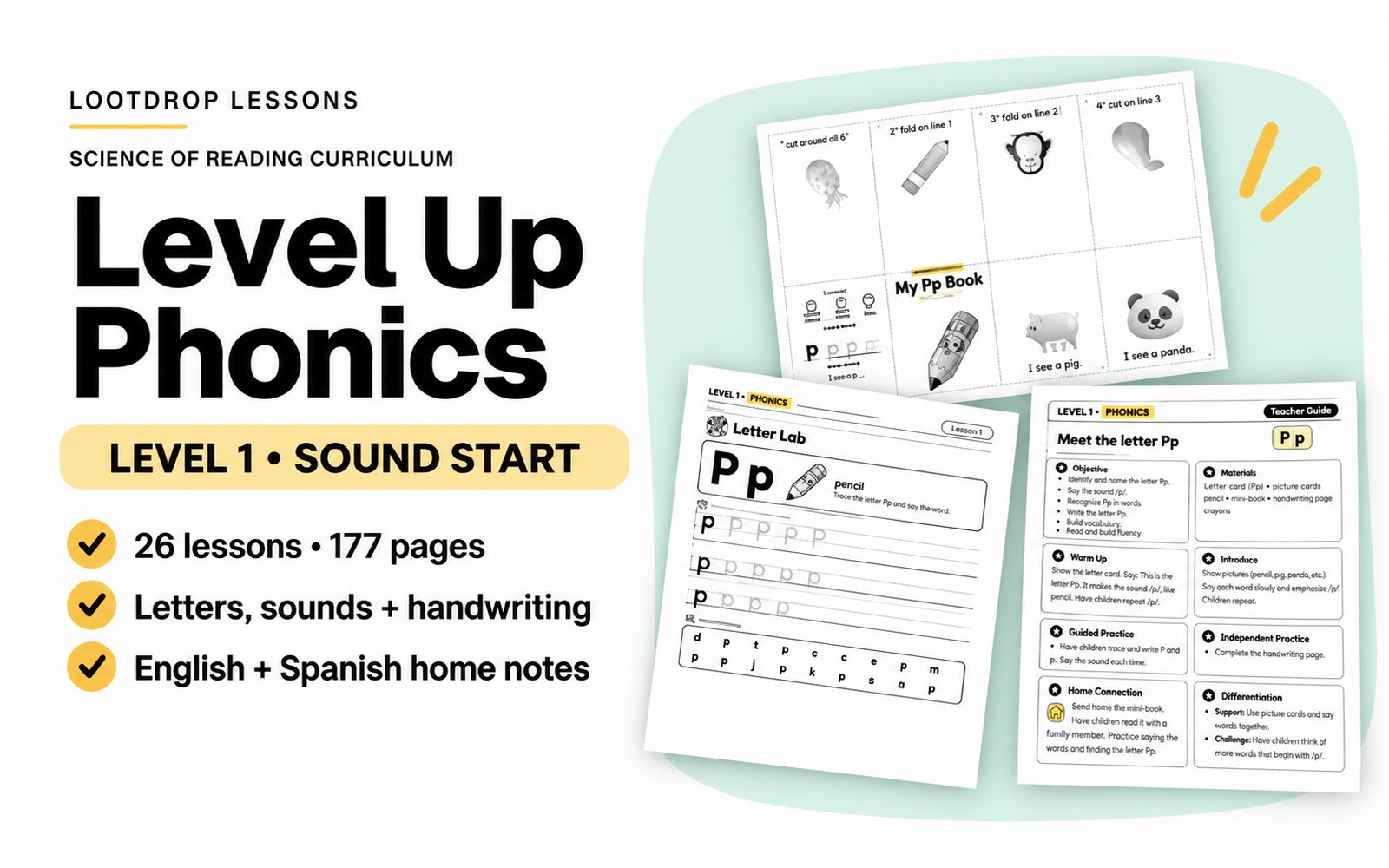
Everything above works with plain lined paper and a whiteboard. If you want it ready to print, Handwriting Power-Ups has warm-up strokes, letter sheets, fact sentences, paragraph copy, half-slips and self-check boxes for K-8, and the V2 set pairs handwriting with short constructed response practice for grades 6-8. Both are below, along with a capital letters anchor chart and the letters and sounds level of Level Up Phonics, which builds handwriting paths into every letter lesson.