Five Short Constructed Responses: The Scarlet Ibis
$2.50

Graphic organizers · Grades 6–8 · PDF + Google Slides · Free
Students read Ray Bradbury's "All Summer in a Day" and watch a film version, then compare how each tells the story of Margot and the only hour of sunshine in seven years.
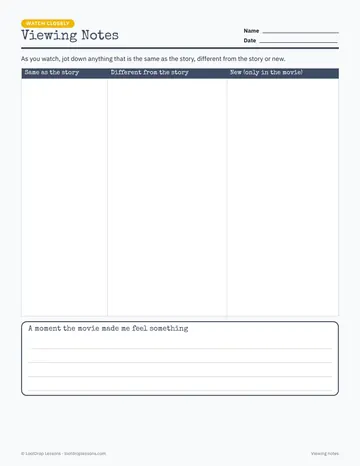
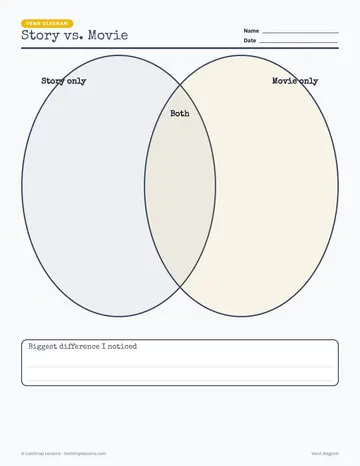
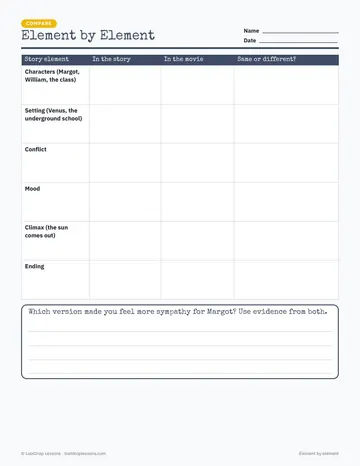
They take viewing notes, fill in a Venn diagram and compare characters, setting, conflict, mood, climax and ending element by element.
A paragraph frame with sentence starters turns their notes into a polished compare-and-contrast paragraph. The story and film are not included.
Topics: literature, reading, ela, slides, powerpoint, presentation, middle, school, grade, 6, 7, 8, free
Built for grades 6–8 (middle school ELA). Format: PDF + Google Slides. Free to download. Ways to use it: short story units; story vs. film standards.
Grades 6–8, so it fits middle school ELA classes.
PDF + Google Slides.
It is free.
Viewing notes, Venn diagram, Element-by-element chart, Compare & contrast paragraph frame, Teacher answer guide + discussion questions, Google Slides version.
Yes. The digital version works in Google Slides or PowerPoint, so students can type their answers and you can assign it in Google Classroom.
Popular ways to use it: Short story units; Story vs. film standards; Sub plans with a video; Writing about literature.