

Teaching Author's Purpose and Point of View With Influencer Culture (Grades 7–9)
 Andy Navarro · Reading Skills & Phonics · · 3 min read
Teach author's purpose, point of view and conflicting viewpoints (RI.8.6) with a high-interest topic: influencers, sponsored posts and disclosure. Lesson steps, a viewpoint tracker, discussion questions and a debate.
Ask a class of 8th graders what an author's purpose is and you'll hear "to persuade, inform or entertain" in perfect unison. Ask them how an author handles the other side of an argument and the room goes quiet. RI.8.6 asks for exactly that: the author's point of view, and how the author acknowledges and responds to conflicting viewpoints.
The fastest way to make that standard click is a topic students already have opinions about. Influencers are perfect: every student follows someone, and almost none of them have thought about why.
Why influencers work for this standard
Influencer culture has real arguments on both sides. Critics point to sponsored posts that don't look like ads, unrealistic lifestyles and the one-sided "friendship" people feel with creators they've never met (often called a parasocial relationship). Supporters point to small businesses, creative careers and communities built around shared interests. An author can take a clear position and still be fair to both, which is the exact move you want students to analyze.
A five-day plan
Day 1: build background
Quick write: "Who is one creator you follow, and why?" Then preview a few terms: sponsored content, disclosure, parasocial relationship, engagement. Students should know that U.S. advertising rules expect influencers to clearly disclose paid partnerships.
Day 2: read for the author's point of view
Read an article that takes a position on influencers. Students annotate two things: sentences where the author states or hints at their own view, and sentences where the author presents another view.
Day 3: track conflicting viewpoints
Use a three-column tracker: the opposing viewpoint, how the author acknowledges it, and how the author responds (agrees in part, refutes with evidence, or dismisses it). This is the heart of RI.8.6.
Day 4: add more sources
Bring in a short data source (a survey of how teens use social media) and two short student opinion pieces with different views. Students answer one question using all three sources.
Day 5: debate and assess
Four corners: "Influencers do more harm than good." Students move, then defend their position using evidence from the readings. Finish with a short skills check.
Sentence starters for author's point of view
- "The author believes ... because ..."
- "The author acknowledges that some people think ..."
- "However, the author responds by ..."
- "The author's purpose is to ... which is shown when ..."
Discussion questions
- How can you tell when a post is an ad?
- Does it matter if an influencer is paid to recommend something, as long as they like it?
- What is fair about the author's argument? What is missing?
- Who benefits most from influencer culture: creators, companies or followers?
Questions teachers ask
How do you teach author's point of view in 8th grade?
Use an argument text on a topic students care about. Have them find where the author states a position, track how the author acknowledges and responds to opposing views, and explain the effect in writing.
What is the difference between author's purpose and point of view?
Purpose is why the author wrote the text (to persuade, inform or explain). Point of view is the author's position or perspective on the topic.
Is influencer culture appropriate for middle school?
Yes, as a media literacy topic. Keep the focus on advertising, disclosure and critical thinking rather than specific creators.
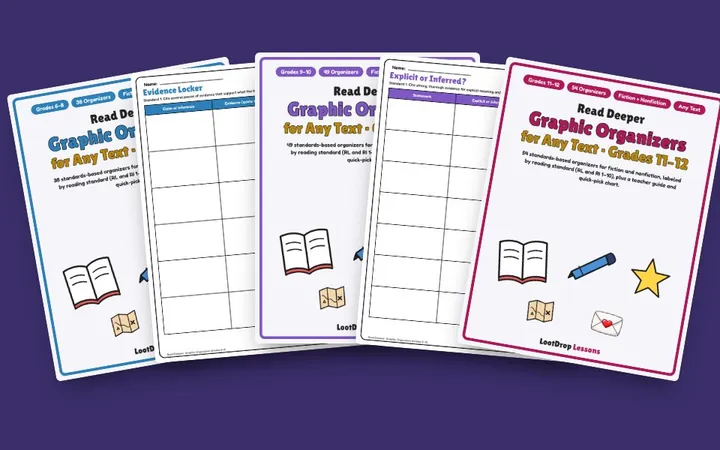
Want the whole week? Likes for Hire is an original article on influencer culture in on-level and modified versions, with a Point of View Detective page, a Conflicting Viewpoints Tracker, Pew survey data and two student op-eds for integrating sources, a four corners debate and a skills test. For any text, the Read Deeper organizers work all year, and Media Literacy for Middle School pairs well.



Comments
Questions, tweaks that worked in your room, ideas for other teachers: share them here.
Loading comments...