

Mean, Median, Mode and Range Activities That Make Data Click (Grades 4 to 6)
 Andy Navarro · Elementary Math · · 3 min read
Teach mean, median, mode and range with real data students collect themselves. Memory tricks, hands-on labs and the mistakes to watch for.
Mean, median, mode and range are easy to memorize for a quiz and easy to forget a week later. They stick when students use them on data they actually care about, especially data they collected themselves.
Here's how I teach the four measures so students understand what each one tells them.
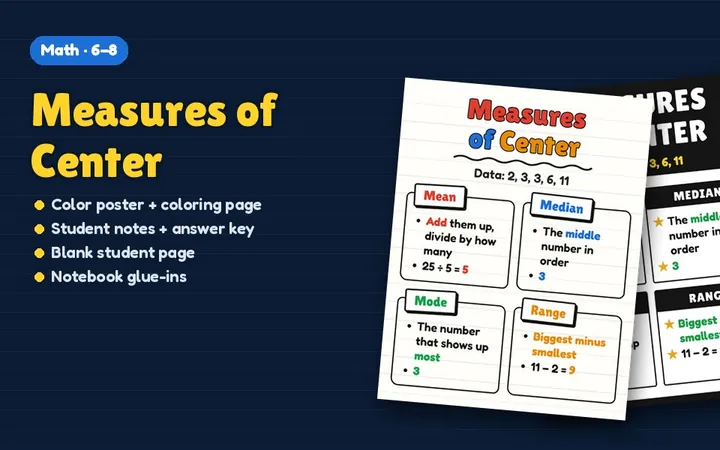
The four measures in plain words
- Mean: the average. Add all the numbers, then divide by how many there are.
- Median: the middle number when the data is in order.
- Mode: the number that shows up most often.
- Range: the difference between the highest and lowest numbers.
Memory tricks that help
- Median sounds like the median in the middle of a road.
- Mode sounds like "most."
- Range is from the highest to the lowest, the full spread.
- Mean is the "mean" one because it takes the most work.
Silly, but students remember them years later.
Always put the data in order first
Make ordering the data the first step every time. It makes the median easy to find, the mode easy to spot and the range easy to calculate. Most mistakes on median come from skipping this step.
Teach the median with an even number of values
When there's an even number of values, there's no single middle number. Students find the two middle numbers and take the number halfway between them (their mean). Practice this on purpose, because it's the case students miss most often.
Collect real data
The best lessons use data from your own class:
- A stacking lab. Students stack cookies, cubes or cups as high as they can in several trials, record their results and find the mean, median, mode and range of their stacks.
- Class surveys. Shoe sizes, siblings, minutes spent reading, or how many letters are in everyone's first name.
- Jumps and throws. Measure standing long jumps or paper airplane flights and compare groups.
When the numbers come from them, students want to know what they mean.
Ask "which measure is best?"
This question takes students from computing to thinking. If one student stacked 40 cookies and everyone else stacked about 10, the mean gets pulled up. The median might describe the class better. Talking about outliers and which measure tells the truer story is where real understanding shows up.
Common mistakes to watch for
- Finding the median without ordering the data first.
- Thinking there's always exactly one mode. A data set can have no mode or more than one.
- Giving the range as "5 to 20" instead of the difference, 15.
- Dividing by the wrong number when finding the mean.
The resources below include a hands-on cookie tower data lab, a mean, median, mode and range quiz and an anchor chart for the four measures.
Questions teachers ask
What grade learns mean, median, mode and range?
Students often meet range and mode in grades 3 to 5, and mean and median become a major focus around 6th grade, depending on state standards.
How do you find the median of an even set of numbers?
Put the numbers in order, find the two middle numbers, add them and divide by 2. The result is the median.
Can a data set have more than one mode?
Yes. If two or more numbers appear the most times, they are all modes. If no number repeats, the data set has no mode.



Comments
Questions, tweaks that worked in your room, ideas for other teachers: share them here.
Loading comments...