

Groundhog Day Activities for 3rd to 5th Grade: Data, Predictions and Persuasive Writing
 Andy Navarro · Seasonal & Holiday · · 2 min read
Groundhog Day activities for upper elementary that practice real skills: prediction data, graphing Punxsutawney Phil's record, shadow science, fact vs. opinion and persuasive writing.
Groundhog Day on February 2 is usually treated as a preschool holiday, but it's surprisingly useful in upper elementary. A groundhog "predicting" the weather opens the door to data, science, evidence and persuasive writing. Older students love debating whether Phil actually knows anything.
A quick bit of background
The legend says that if a groundhog sees its shadow on February 2, there will be six more weeks of winter. If it doesn't, spring comes early. The most famous groundhog, Punxsutawney Phil in Pennsylvania, has been making predictions since the 1880s. Students can look up his record and test it.
Data: is Phil accurate?
Give students a table of Phil's predictions for recent years alongside what actually happened with the weather (you can find these records online). Students tally how often he was right, make a bar graph and calculate the percent of correct predictions. Then ask: Would you trust Phil to plan a picnic? This one activity covers data, fractions or percents and reasoning with evidence.
Class predictions
Before February 2, have students predict whether Phil will see his shadow and explain why. Graph the class predictions. After the big day, compare. Older students can find the mean, median and mode of something related, like the number of days until the first 60-degree day each student predicts.
Shadow science
Go outside at three times during the day and measure the length of a student's shadow or a stick's shadow. Students graph the lengths and explain why shadows change as the sun moves across the sky. It turns a folk tale into a real science lesson about light and the earth's rotation.
Fact vs. opinion
Write statements on the board and have students sort them: "Groundhog Day is on February 2" (fact), "Punxsutawney Phil is the best groundhog" (opinion), "Groundhogs hibernate in winter" (fact). Then have students write one fact and one opinion of their own.
Persuasive writing
Give students a prompt: "Should we trust a groundhog to predict the weather?" or "Should Groundhog Day be a school holiday?" Students state a claim, give two reasons with evidence (their accuracy data is perfect here) and write a conclusion. It's a low-stakes topic that makes argument writing fun.
Read and research
Short nonfiction articles about groundhogs (they're also called woodchucks and are a type of marmot) give students practice with main idea and text features. Students can create a fact sheet or a short "Is it true?" myth-buster page.
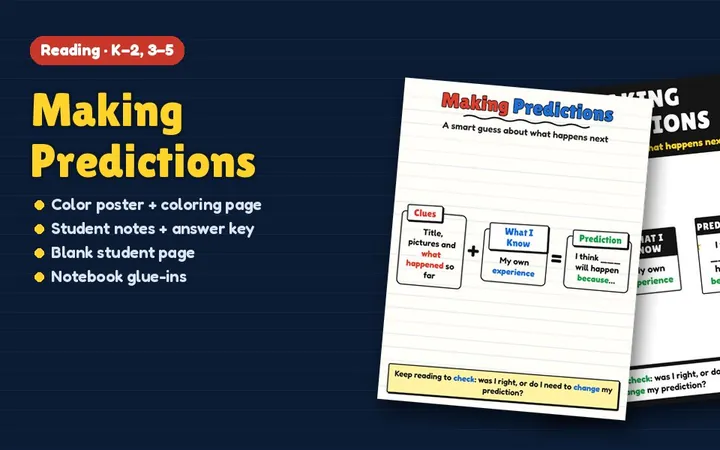
The resources below include a hands-on mean, median, mode and range data lab, a free data quiz and anchor charts for predictions and fact vs. opinion.
Questions teachers ask
How accurate is Punxsutawney Phil?
Records suggest Phil's predictions are right well under half the time, which makes his record a great data set for students to analyze and debate.
What can older students do for Groundhog Day?
Upper elementary students can graph and analyze prediction data, measure shadows for a science lesson, sort facts and opinions and write persuasive essays.
When is Groundhog Day?
Groundhog Day is celebrated every year on February 2.



Comments
Questions, tweaks that worked in your room, ideas for other teachers: share them here.
Loading comments...