

Coloring Pages for High School Students: When and How to Use Them
 Andy Navarro · Classroom Management & Free Tools · · 3 min read
Coloring pages for high school and middle school students: why they work as brain breaks, when to use them, and how to keep them from becoming busywork.
Put a stack of coloring pages on the back table of a high school classroom and watch what happens. The same students who rolled their eyes at the idea will be asking for the good markers. Teenagers don't outgrow coloring. They just stop being offered it.
Used on purpose, coloring pages for high school students are a quiet, low-cost tool for the moments when a class needs to settle.
Why it works with older students
- It is calming and low stakes. There is nothing to get wrong. For a stressed student, that is rare in a school day.
- It keeps hands busy. Many students listen better while doing something simple with their hands.
- It is off a screen. Ten minutes without a device is a real break.
- It lowers the temperature. A tense room gets quieter when people are coloring.
When to use them
- After a test. Students finish at different times. Coloring keeps the room silent for those still working.
- Testing weeks. Between sections, or in the afternoon after a morning of state testing.
- During a read-aloud or podcast. Coloring while listening works at every age.
- Advisory and homeroom. A calm start or end to the day.
- Days before a break. When half the class is gone and a new lesson makes no sense.
- Sub days. An easy, quiet option to leave in the folder.
- Calm corner. A choice for a student who needs five minutes to reset.
- Early finishers. A standing option that isn't more work.
- Club meetings and tutoring. Something to do while talking.
Choosing pages for teenagers
- Detailed designs. Patterns, lettering and intricate scenes. Nothing that looks like it came from a kindergarten workbook.
- Words worth reading. Growth mindset and encouraging phrases give the page a point.
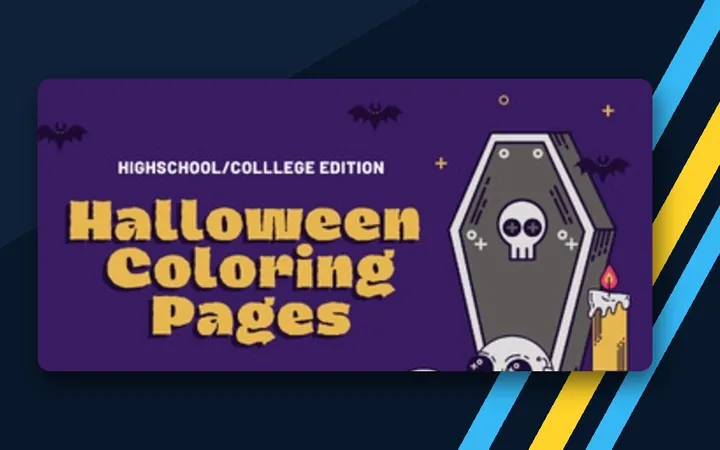
- Seasonal sets. Halloween, Thanksgiving and Valentine's Day pages make an easy tradition.
- Variety. Offer three or four designs and let students pick.
Keeping it from becoming busywork
- Make it optional. Some students would rather read or rest. A choice is what keeps it a break.
- Pair it with something. Listening, a discussion or reflection time.
- Set a time. Ten or fifteen minutes with a visible timer.
- Don't grade it. Ever.
- Display them. A wall of finished pages changes how a room feels.
Supplies
Colored pencils are the best all-around choice. Fine-tip markers are popular but bleed, so print on heavier paper or one-sided. Keep a bin students can reach without asking.
For staff, too
A stack of coloring pages and a box of pencils in the workroom or at a long meeting is a small thing that teachers appreciate. It works for the same reasons.
Questions teachers ask
Is coloring appropriate for high school?
Yes, as a short, optional break or paired with listening. Choose designs made for older students.
Does coloring help students focus?
Many students find it calming and say it helps them listen. It is a simple option to offer and easy to drop if it doesn't suit a class.
How long should a coloring break be?
Ten to fifteen minutes is enough.
If you want pages that fit older students, I have growth mindset and positivity coloring pages for any grade, seasonal sets for Halloween, Thanksgiving and Valentine's Day made for high school and college, and a set for adults and staff. A countdown from Timer Arcade keeps the break to its ten minutes.



Comments
Questions, tweaks that worked in your room, ideas for other teachers: share them here.
Loading comments...