Cell Diagram Labeling Practice: How to Help Students Learn the Organelles
 Andy Navarro · Classroom Management & Free Tools · · 3 min read
Cell diagram labeling practice for middle and high school: animal, plant and bacterial cells, what each organelle does, and study methods that stick.
Every biology student labels a cell diagram, and most of them forget it within a month. They memorize where the word "mitochondria" goes on one specific picture. Change the picture and it's gone. The fix is to practice the diagram in ways that tie each structure to what it does.
Here is how to make cell diagram labeling practice stick for middle and high school students.
What students should be able to label
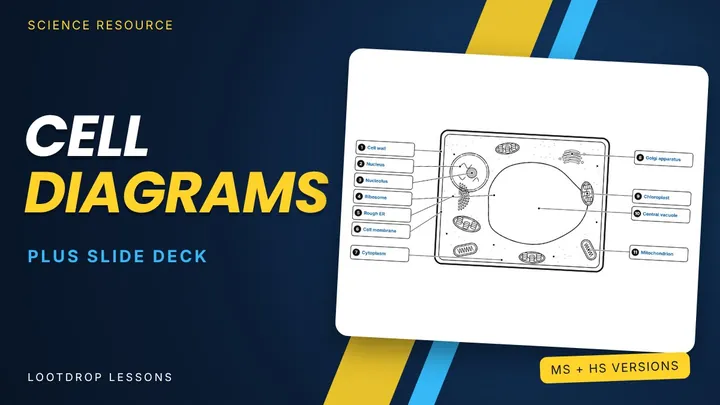
Animal cell: cell membrane, nucleus, cytoplasm, mitochondria, ribosomes, endoplasmic reticulum (rough and smooth), Golgi apparatus, lysosomes, and small vacuoles.
Plant cell: everything above, plus the cell wall, chloroplasts and a large central vacuole.
Bacterial (prokaryotic) cell: cell wall, cell membrane, cytoplasm, ribosomes, DNA in a nucleoid region with no nucleus, and often a flagellum.
Middle school standards usually focus on the main organelles and the plant and animal comparison. High school adds the endomembrane system, prokaryotes and more detail on function.
Structure and function, together
A label alone is trivia. Pair every structure with its job from the first day.
- Nucleus: holds the DNA and directs the cell's activities.
- Mitochondria: release energy from food through cellular respiration.
- Ribosomes: build proteins.
- Endoplasmic reticulum: makes and moves proteins and lipids.
- Golgi apparatus: packages and ships proteins.
- Lysosomes: break down waste and worn-out parts.
- Cell membrane: controls what enters and leaves.
- Cell wall: gives plant cells support and shape.
- Chloroplasts: capture light energy to make sugar in photosynthesis.
- Vacuole: stores water and materials.
Practice methods that work
- Word bank first, then without. Start with a labeled word bank. Take it away for the second attempt. The struggle to recall is what builds memory.
- Draw it from memory. A blank page, two minutes, sketch and label everything you can. Then check against the diagram and add what you missed in another color.
- Different pictures. Use more than one drawing of the same cell, including a real micrograph. Students need to recognize a mitochondrion in any style.
- Job first. Give the function and have students point to the structure, instead of the other way around.
- Color by function. One color for energy, one for protein production, one for storage and transport.
- Analogies, with limits. A cell as a city or factory helps. Ask students where the analogy breaks down, which is where the understanding is.
- Short and often. Three minutes at the start of class for a week beats one long worksheet.
Comparing cells
A Venn diagram or a three-column chart for animal, plant and bacterial cells turns labeling into thinking. Ask the questions that show up on tests: Which structures do all cells have? Why do plant cells need chloroplasts and a cell wall? What does a prokaryote lack?
Common mix-ups
- Cell wall and cell membrane. Plant cells have both. The membrane is inside the wall.
- Chloroplasts and mitochondria. Plant cells have both, too. Photosynthesis makes sugar and respiration releases its energy.
- "Bacteria have no DNA." They have DNA. They don't have a nucleus around it.
- Rough and smooth ER. Rough has ribosomes attached.
Questions teachers ask
What is the best way to memorize the parts of a cell?
Retrieve them often: draw and label from memory, check, and repeat over several days, always pairing each part with its function.
What is the difference between plant and animal cells?
Plant cells have a cell wall, chloroplasts and a large central vacuole. Animal cells don't, and they have lysosomes and small vacuoles.
What grade do students learn cell organelles?
Usually 6th or 7th grade, with more depth in high school biology.
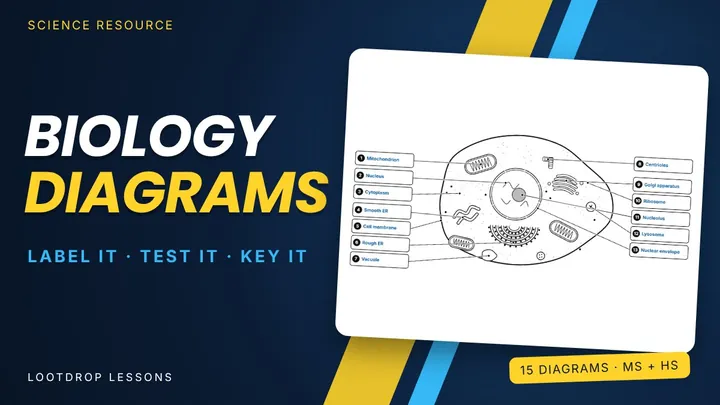
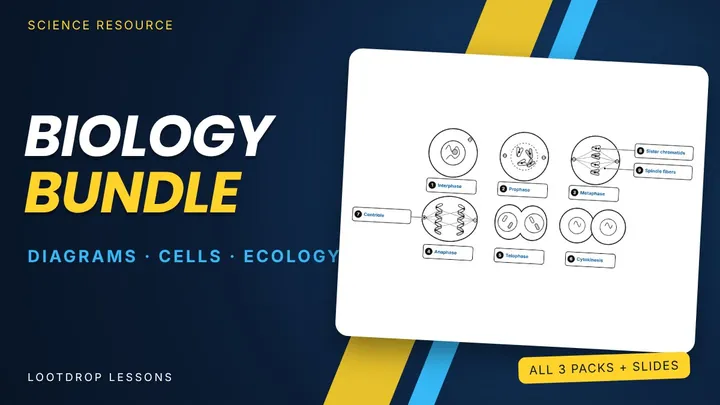
If you want the diagrams made, my cell diagram set has animal, plant and bacterial cells, the membrane and mitosis, organelle charts and a 16-slide teaching deck, and the biology diagrams set adds 15 more label-the-diagram pages with test and word-bank versions. For a wall reference, the free Anchor Chart Studio has a parts of a cell chart.



Comments
Questions, tweaks that worked in your room, ideas for other teachers: share them here.
Loading comments...