The Science of Round: Pi Day Science Activities (Grades 3–5)
$3

Activities & projects · Grades 6–8 · PDF, 8 pages + digital (Google Slides / PowerPoint) · $3
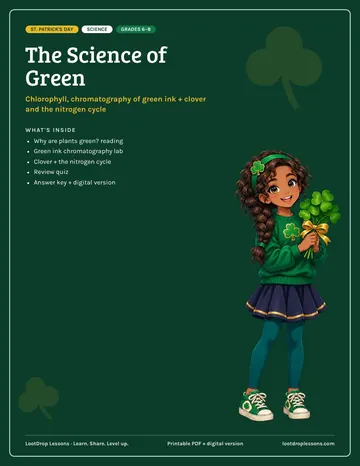
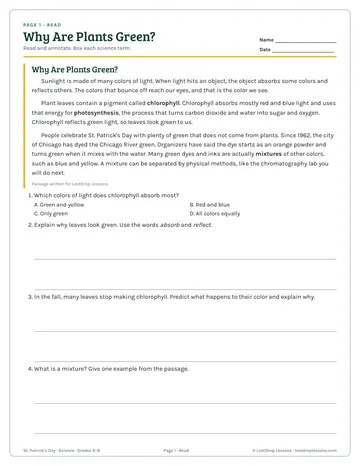
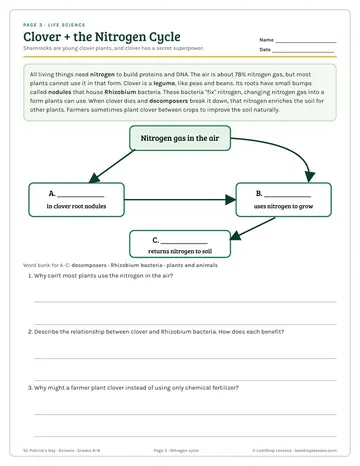
A St. Patrick's Day science set built around the color green: how chlorophyll makes plants green, how to separate the pigments in green ink, and how clover adds nitrogen to soil.
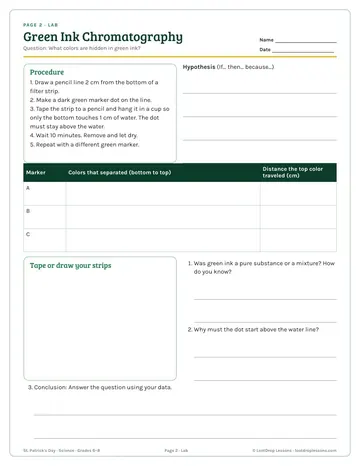
Students will explain how pigments absorb and reflect light; use paper chromatography to separate a mixture; describe the role of legumes and bacteria in the nitrogen cycle; analyze data and write a conclusion.
Each set includes a teacher guide with a suggested plan, four student pages, an answer key and a digital version with type-in boxes. It is also part of the St. Patrick's Day Cross-Curricular Pack for grades 6–8, with math, ELA, science and social studies.
Topics: math, centers, stations, slides, powerpoint, presentation, middle, school, grade, 6, 7, 8
Built for grades 6–8 (middle school science). Format: PDF, 8 pages + digital (Google Slides / PowerPoint). $3 on its own, or included with All-Access. Ways to use it: st. Patrick's Day week; holiday stations or rotations.
Grades 6–8, so it fits middle school science classes.
PDF, 8 pages + digital (Google Slides / PowerPoint). You can edit it to fit your class.
$3, or free with an All-Access membership.
Teacher guide + suggested plan, Read: Why Are Plants Green?, Chromatography lab, Clover + the nitrogen cycle, Review quiz, Answer key, Digital version (Google Slides / PowerPoint).
Yes, an answer key is included.
Yes. The digital version works in Google Slides or PowerPoint, so students can type their answers and you can assign it in Google Classroom.
Popular ways to use it: St. Patrick's Day week; Holiday stations or rotations; Sub plans; Science class.